Best Inventory Management Software for Ecommerce in 2026
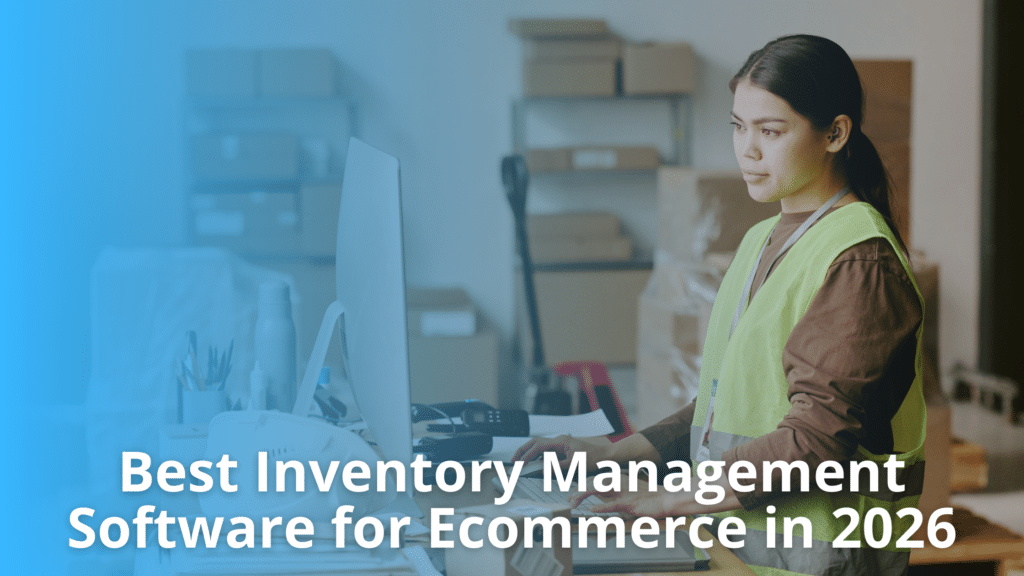
Inventory accuracy has become a critical requirement for modern ecommerce operations. Customers expect products to be available, orders to ship quickly, and inventory information to remain consistent across every sales channel. Even small discrepancies can lead to overselling, delayed fulfillment, canceled orders, and reduced customer trust.
As ecommerce businesses expand across Shopify, Amazon, Walmart, eBay, and other platforms, manual inventory tracking becomes increasingly difficult. Product catalogs grow larger, supplier updates become more frequent, and order volumes rise quickly. Businesses need systems that can maintain accurate inventory records in real time.
Why inventory accuracy matters?
- Preventing overselling and stockouts.
- Reducing order cancellations and fulfillment delays.
- Improving customer satisfaction through reliable product availability.
- Supporting accurate purchasing and replenishment decisions.
- Maintaining consistent inventory levels across multiple sales channels.
Inventory management software helps ecommerce businesses address these challenges by automating inventory synchronization, tracking stock movements, and providing real-time visibility into available inventory. Advanced solutions also support supplier integrations, order routing, reporting, and forecasting, enabling businesses to operate more efficiently as they scale.
In 2026, choosing the right inventory management platform is not only about tracking stock. It is about building a reliable operational foundation that supports growth, reduces errors, and improves fulfillment performance across the entire ecommerce business.
Why Inventory Management Software Matters for Ecommerce
Accurate inventory control supports profitable ecommerce operations. Modern inventory management software reduces manual work, improves stock visibility, and helps businesses deliver a consistent customer experience.
Common Inventory Challenges in Ecommerce
- Inventory inaccuracies – Manual inventory updates often create mismatched stock records across sales channels. Incorrect quantities can lead to overselling, stockouts, canceled orders, and dissatisfied customers. Maintaining accurate inventory becomes more difficult as product catalogs and sales volume increase.
- Managing multiple sales channels – Selling through Shopify, Amazon, eBay, Walmart, and other marketplaces requires synchronized inventory. Without centralized management, each platform may display different stock levels, creating operational confusion and increasing fulfillment risks.
- Supplier data inconsistencies – Suppliers frequently update product availability, pricing, specifications, and images. Businesses relying on manual updates may display outdated information, causing pricing errors, unavailable products, and customer complaints.
- Demand forecasting difficulties – Seasonal trends, promotions, and changing customer demand make inventory planning challenging. Poor forecasting leads to excess inventory that increases storage costs or insufficient stock that results in lost sales opportunities.
- Order fulfillment delays – Inventory errors slow order processing because staff must manually verify stock before shipment. Delayed fulfillment affects customer satisfaction, increases support requests, and may reduce marketplace seller ratings.
- Limited operational visibility – Businesses without centralized reporting struggle to identify fast-moving products, slow inventory turnover, supplier performance, and reorder requirements. Limited visibility makes informed purchasing and inventory planning difficult as operations expand.
Business Benefits of Inventory Automation
- Improves inventory accuracy – Inventory automation continuously updates stock quantities after every sale, return, or supplier update. Accurate inventory records reduce overselling and help maintain customer confidence.
- Reduces manual workload – Automated synchronization eliminates repetitive inventory updates across multiple platforms. Staff spend less time correcting errors and more time managing growth-oriented activities.
- Supports faster order processing – Real-time inventory visibility enables quicker order verification and fulfillment. Faster processing improves delivery performance and strengthens the overall customer experience.
- Enhances supplier coordination – Automated updates keep pricing, availability, product descriptions, and specifications aligned with supplier data. This minimizes discrepancies and improves catalog accuracy across ecommerce channels.
- Provides better business insights – Many inventory management software platforms include reporting features that monitor inventory turnover, stock movement, supplier performance, and sales trends. These insights support better purchasing decisions.
- Scales with business growth – As businesses add suppliers, products, warehouses, and marketplaces, automation handles increasing operational complexity without requiring proportional increases in manual effort. This creates a more efficient and scalable ecommerce infrastructure.
Key Features to Look for in Inventory Management Software
Selecting the right inventory management software requires evaluating features that improve inventory accuracy, automate routine tasks, and support business growth. The right platform should simplify operations, integrate with existing systems, and provide reliable data for informed decision-making.
Essential Inventory Control and Synchronization Features
Strong inventory management software should provide accurate, real-time visibility across every sales channel and supplier. The following capabilities are essential for maintaining efficient operations:
- Real-time inventory synchronization – Automatically updates stock quantities across ecommerce stores, marketplaces, and warehouses. This reduces overselling, prevents stockouts, and maintains consistent inventory records.
- Centralized inventory management – Consolidates inventory from multiple suppliers and locations into one dashboard. This simplifies monitoring and improves inventory planning across the business.
- Automated stock alerts and reorder management – Sends notifications when inventory reaches predefined thresholds. Businesses can replenish products before shortages affect customer orders.
- Product catalog synchronization – Keeps product titles, descriptions, images, specifications, pricing, and availability consistent across connected sales channels. This reduces manual updates and improves data accuracy.
- Order synchronization – Adjusts inventory immediately after orders are placed, cancelled, or returned. Accurate stock records help improve fulfillment efficiency and customer satisfaction.
These capabilities reduce manual work, improve operational accuracy, and create a stable foundation for businesses managing growing product catalogs and multiple selling channels.
Comprehensive system integrations – Connect with ecommerce platforms, marketplaces, suppliers, ERP systems, shipping providers, and accounting software. Integrated workflows eliminate duplicate data entry and enable consistent information sharing throughout the entire order fulfillment process.
Advanced reporting and analytics – Generate reports on inventory turnover, product performance, stock valuation, demand patterns, and supplier reliability. Accurate reporting helps businesses identify trends, optimize purchasing decisions, and improve overall inventory planning.
Scalable infrastructure – Choose software that supports expanding product catalogs, additional warehouses, new suppliers, and higher order volumes. Scalable solutions allow businesses to grow without replacing existing systems or disrupting daily operations.
Best Inventory Management Software for Ecommerce in 2026
When you choose the right inventory management software, it improves inventory accuracy, order processing, and supplier coordination. The best platforms combine automation, integrations, and real-time inventory visibility to help ecommerce businesses reduce manual work and scale efficiently.
Inventory Source
Inventory Source is an inventory management software designed for dropshipping and wholesale businesses. It connects suppliers with ecommerce stores, automates inventory synchronization, and streamlines order processing across multiple sales channels.
Core Features and Automation Capabilities
Inventory Source helps retailers automate product, inventory, and order management through supplier integrations.
- Supports automated inventory synchronization with hundreds of integrated suppliers, reducing manual product updates.
- Imports product data, including descriptions, images, specifications, pricing, and stock availability, into connected stores.
- Automates order routing by forwarding customer orders directly to participating suppliers for fulfillment.
- Integrates with major ecommerce platforms, marketplaces, and shopping carts through a centralized dashboard.
- Provides customizable pricing rules, scheduled catalog updates, and inventory monitoring to improve operational efficiency and minimize overselling.
Best Fit, Advantages, and Limitations
Inventory Source is designed for businesses seeking supplier automation, centralized inventory management, and streamlined ecommerce operations across multiple sales channels.
- Best Fit – Suitable for dropshipping businesses, multi-supplier retailers, and growing ecommerce operations that require automated supplier integrations and centralized inventory management.
- Advantages – Offers extensive supplier integrations, automated inventory synchronization, order automation, customizable pricing rules, and broad ecommerce platform compatibility for efficient operations.
- Limitations – It is not a supplier or marketplace. Businesses must establish supplier relationships separately, and available automation depends on the supplier’s supported integration method.
Flxpoint
Flxpoint is an automation platform designed for ecommerce businesses managing multiple suppliers, sales channels, and fulfillment workflows. It centralizes inventory, order routing, pricing, and catalog management through connected integrations.
Multi-Supplier Automation and Order Routing
Businesses selling through multiple suppliers require accurate inventory updates and efficient fulfillment. Flxpoint helps automate these processes while reducing manual work across connected sales channels.
- Centralizes inventory data from multiple suppliers to maintain accurate stock levels across ecommerce stores and marketplaces.
- Automatically routes orders to the most appropriate supplier based on predefined rules such as inventory availability, warehouse location, shipping method, or supplier priority.
- Supports automated product catalog synchronization, pricing updates, shipment tracking, and supplier integrations, helping businesses improve operational efficiency while minimizing fulfillment delays and inventory discrepancies.
Best Fit, Advantages, and Limitations
Flxpoint suits businesses that need advanced automation across suppliers, marketplaces, and fulfillment operations while supporting scalable ecommerce growth.
- Best Fit – Ideal for medium to large ecommerce businesses managing multiple suppliers, warehouses, sales channels, and complex fulfillment workflows requiring centralized operational control.
- Advantages – Provides flexible workflow automation, intelligent order routing, inventory synchronization, pricing management, catalog control, and extensive integration capabilities that support scalable ecommerce operations.
- Limitations – The platform offers advanced functionality, but implementation may require additional setup and configuration for businesses with highly customized operational requirements.
Ordoro
Ordoro is a cloud-based inventory management and order fulfillment platform designed for ecommerce businesses. It combines inventory control, shipping automation, and supplier management to simplify multi-channel operations.
Inventory and Order Management Features
Ordoro provides practical tools that help merchants manage inventory and fulfill orders efficiently across multiple sales channels.
- Centralized inventory – Synchronizes stock levels across connected marketplaces and ecommerce platforms to reduce overselling and maintain inventory accuracy.
- Order automation – Consolidates orders into one dashboard and automates routing, shipping label creation, and fulfillment workflows.
- Supplier and purchasing tools – Support purchase order management, inventory replenishment, and vendor tracking to improve stock planning.
- Shipping integrations – Connects with major carriers, enabling rate comparisons, shipment tracking, and faster order processing from a single interface.
Best Fit, Advantages, and Limitations
Ordoro suits growing ecommerce businesses seeking shipping automation and centralized inventory management. Consider operational requirements before selecting the platform.
- Best fit – Suitable for small and mid-sized merchants managing multiple sales channels, warehouses, and suppliers that require streamlined inventory and fulfillment operations.
- Advantages – Offers strong shipping automation, purchase order management, barcode support, and broad ecommerce integrations that improve operational efficiency and reduce manual work.
- Limitations – Advanced features and automation capabilities are available in higher-tier plans, which may increase costs for businesses with limited operational requirements.
Cin7
Cin7 is a cloud-based inventory management software that combines inventory control, order management, purchasing, and multi-channel selling. It helps ecommerce businesses maintain inventory accuracy and improve operational efficiency.
Inventory Planning and Multi-Channel Features
Cin7 provides tools that simplify inventory planning while supporting sales across multiple channels.
- Tracks inventory levels in real time across warehouses, online stores, and marketplaces to reduce stock discrepancies.
- Automates purchase orders, stock transfers, and replenishment based on demand forecasts and predefined inventory rules.
- Integrates with ecommerce platforms, accounting systems, shipping providers, and point-of-sale solutions for centralized operations.
- Offers detailed inventory reports, sales analytics, and forecasting tools that help businesses optimize purchasing decisions and maintain balanced stock levels.
Best Fit, Advantages, and Limitations
Cin7 suits growing businesses that require centralized inventory control, multi-channel management, and advanced planning capabilities across expanding operations.
- Best Fit – Designed for mid-sized and enterprise ecommerce businesses managing multiple warehouses, sales channels, and complex inventory workflows requiring centralized visibility and operational control.
- Advantages – Provides strong automation, extensive integrations, demand forecasting, and real-time inventory tracking that improve order accuracy, purchasing efficiency, and overall supply chain management.
- Limitations – Higher pricing and advanced functionality may exceed the needs of smaller businesses. Initial implementation and staff training can also require additional time and resources.
Zoho Inventory
Zoho Inventory is cloud-based inventory management software designed for small and medium-sized businesses. It combines inventory control, order management, shipping integration, and warehouse tracking within a unified platform.
Automation and Warehouse Management
Zoho Inventory automates routine inventory operations to reduce manual work and improve stock accuracy.
- Automates purchase orders, sales orders, invoicing, and shipment tracking across connected sales channels.
- Supports multiple warehouses with stock transfers, location-based inventory management, and centralized visibility.
- Integrates with major shipping carriers to generate labels, track deliveries, and streamline fulfillment workflows.
- Provides low-stock alerts, reorder automation, and serial or batch tracking for better inventory control.
- Offers reporting dashboards that help businesses monitor stock movement, fulfillment efficiency, and purchasing trends in real time.
Best Fit, Advantages, and Limitations
Zoho Inventory suits businesses seeking affordable inventory automation while balancing scalability, integrations, and warehouse management capabilities for growing operations.
- Best Fit – Well suited for small and medium-sized ecommerce businesses already using the Zoho ecosystem or managing multiple warehouses and online sales channels.
- Advantages – Offers strong automation, barcode support, shipping integrations, inventory reporting, and competitive pricing with an intuitive interface that simplifies daily inventory operations.
- Limitations – Advanced manufacturing capabilities, enterprise customization, and extensive third-party marketplace integrations are less comprehensive than some enterprise-focused inventory management platforms.
Katana Cloud Inventory
Katana Cloud Inventory combines manufacturing planning, inventory visibility, and order management to help businesses maintain efficient production and accurate stock control.
Manufacturing and Inventory Control
- Supports bill of materials (BOM), production scheduling, and material planning to improve manufacturing efficiency and reduce production delays.
- Provides real-time inventory tracking across raw materials, work-in-progress, and finished goods, helping businesses maintain accurate stock visibility.
- Integrates purchasing, sales, and manufacturing workflows into a single system. This inventory management software reduces manual updates and improves operational accuracy.
Best Fit, Advantages, and Limitations
Katana suits manufacturers need integrated production and inventory management capabilities.
- Best Fit – Ideal for small and medium manufacturers requiring production planning, inventory tracking, and order management within one centralized platform.
- Advantages – Offers real-time inventory visibility, manufacturing automation, and integrations with leading ecommerce, accounting, and warehouse management platforms.
- Limitations – Advanced manufacturing requirements, enterprise customization, and higher-volume operations may require additional integrations or more specialized solutions.
Fishbowl Inventory
Fishbowl Inventory is designed for businesses requiring advanced inventory control, warehouse management, manufacturing support, and seamless accounting integration.
Advanced Inventory and Warehouse Features
- Supports barcode scanning, serial number tracking, and batch management to improve inventory accuracy and warehouse efficiency.
- Automates purchase orders, reorder points, and stock transfers, helping businesses maintain optimal inventory levels with minimal manual work.
- Integrates with accounting systems and provides detailed inventory reports, making this inventory management software suitable for growing operations requiring better inventory visibility.
Best Fit, Advantages, and Limitations
Fishbowl Inventory suits businesses needing advanced inventory control and warehouse operations.
- Best Fit – Ideal for manufacturers, wholesalers, and distributors managing complex inventory, warehouse workflows, and production processes across multiple locations.
- Advantages – Provides strong inventory tracking, manufacturing support, barcode capabilities, and accounting integration for improved operational efficiency and stock accuracy.
- Limitations – Higher implementation complexity and costs may make it less suitable for small ecommerce businesses with basic inventory requirements.
Comparing the Top Inventory Management Platforms
The right inventory management software depends on your business size, sales channels, automation needs, and operational complexity. Comparing leading platforms helps identify the best solution for current requirements while supporting future growth.
| Software | Starting Pricing | Key Integrations | Automation | Warehouse Support | Reporting& Analytics | Ideal Business Size | Best Suited Business Type |
| Inventory Source | From $99/month | Shopify, BigCommerce, WooCommerce, Amazon, eBay, Walmart, supplier integrations | Automated inventory sync, product updates, and order routing | Single and multi-supplier inventory management | Inventory performance, synchronization, and catalog reports | Small to mid-sized businesses | Dropshipping businesses requiring supplier automation |
| Flxpoint | Custom pricing | Shopify, Amazon, Walmart, BigCommerce, ERP systems, suppliers, marketplaces | Advanced order routing, supplier management, pricing rules, workflow automation | Multi-warehouse and multi-supplier support | Advanced operational dashboards and custom reporting | Mid-sized to enterprise businesses | Omnichannel retailers, distributors, and high-volume sellers |
| Cin7 Core | From approximately $349/month | Shopify, Amazon, Xero, QuickBooks, POS systems | Purchase orders, inventory replenishment, and order workflows | Multi-location warehouse management | Inventory forecasting and financial reporting | Growing SMBs | Retailers, wholesalers, and manufacturers |
| Ordoro | From approximately $349/month | Shopify, WooCommerce, Amazon, eBay, USPS, FedEx | Shipping automation, dropshipping workflows, purchase orders | Multi-warehouse inventory tracking | Sales, shipping, and inventory reports | Small to mid-sized businesses | Ecommerce businesses focused on shipping efficiency |
| Zoho Inventory | Free plan available, paid plans from approximately $39/month | Shopify, Amazon, Etsy, Zoho ecosystem | Order processing, stock updates, reorder management | Multiple warehouse support | Custom inventory and sales reports | Small businesses | Businesses seeking affordable inventory management |
| Fishbowl Inventory | Custom pricing | QuickBooks, Shopify, Salesforce | Manufacturing workflows, barcode management, inventory control | Advanced warehouse management | Manufacturing and inventory analytics | Mid-sized businesses | Manufacturers and warehouse-intensive operations |
| NetSuite ERP | Custom pricing | Oracle ecosystem, Shopify, CRM and ERP integrations | Enterprise inventory, procurement, and financial automation | Global warehouse management | Real-time enterprise dashboards | Large enterprises | Businesses requiring integrated ERP and inventory management |
| Katana Cloud Inventory | From approximately $179/month | Shopify, WooCommerce, QuickBooks, Xero | Production planning, material tracking, order automation | Multi-location inventory management | Manufacturing and production reports | Small to mid-sized manufacturers | Direct-to-consumer manufacturers and production businesses |
When evaluating inventory management software, compare more than pricing alone. Consider integration compatibility, automation capabilities, reporting depth, warehouse support, and long-term scalability. Businesses with multiple suppliers and sales channels generally benefit from platforms that automate inventory synchronization, pricing updates, and order routing, while manufacturers may require stronger production planning and warehouse management capabilities.
How to Choose the Right Inventory Management Software
Choosing the right inventory management software requires evaluating current operations, future growth plans, integration needs, and automation capabilities. A structured assessment helps businesses invest in a solution that supports long-term efficiency.
Evaluating Your Business Requirements
Before selecting inventory management software, identify the operational challenges that affect daily performance. The right platform should solve existing issues while supporting future expansion.
- Assess inventory complexity. Determine the number of SKUs, warehouse locations, suppliers, and sales channels you manage. Businesses with larger catalogs require stronger automation and centralized inventory control.
- Review existing workflows. Identify manual tasks such as stock updates, purchase order creation, order routing, or reporting. Prioritize software that automates repetitive processes and reduces human error.
- Check integration requirements. Ensure compatibility with your ecommerce platform, marketplaces, accounting software, ERP systems, shipping providers, and supplier feeds. Seamless integrations reduce duplicate data entry and improve operational accuracy.
- Define reporting needs. Decide whether you need real-time inventory visibility, demand forecasting, low-stock alerts, profitability reports, or supplier performance analytics. Reporting capabilities should align with business objectives.
Selecting software based on measurable operational requirements improves implementation success and ensures the platform delivers long-term value rather than creating additional complexity.
Matching Software to Growth and Operational Goals
- Plan for scalability. Choose software that supports increasing order volumes, additional warehouses, new suppliers, and expanding product catalogs without requiring major system changes.
- Support multi-channel selling. If growth includes selling on marketplaces and multiple ecommerce platforms, ensure the system synchronizes inventory across every channel in real time.
- Evaluate automation capabilities. Look for automated inventory synchronization, purchase order generation, supplier integrations, pricing updates, and order routing to improve operational efficiency as the business expands.
- Prioritize reliability and performance. Stable system performance becomes increasingly important as transaction volumes grow. Review uptime history, customer support quality, and update frequency before making a decision.
- Consider implementation and training. Select software with clear onboarding resources, documentation, and technical support to reduce deployment time and accelerate user adoption.
- Review long-term costs. Compare subscription fees, integration costs, feature availability, and upgrade requirements against expected business growth to ensure the solution remains cost-effective over time.
Best Practices for Successful Inventory Management Implementation
Implementing inventory management software requires careful planning, accurate data, and continuous monitoring. Following proven practices improves inventory accuracy, reduces operational risks, and supports long-term ecommerce growth.
- Define clear inventory objectives – Establish measurable goals before implementation, such as reducing stockouts, improving inventory accuracy, shortening order processing time, or increasing inventory turnover. Clear objectives help evaluate system performance and guide future improvements.
- Clean and standardize product data – Verify product names, SKUs, descriptions, categories, pricing, and supplier information before migration. Consistent data minimizes synchronization errors and ensures reliable reporting across sales channels.
- Integrate all business systems – Connect inventory management software with ecommerce platforms, marketplaces, suppliers, accounting systems, and shipping providers. Centralized data improves operational visibility and eliminates manual updates.
- Automate routine inventory processes – Configure automatic inventory synchronization, reorder points, low-stock alerts, and order routing. Automation reduces manual work, improves accuracy, and helps maintain consistent stock availability.
- Train users and document workflows – Ensure employees understand system features, inventory procedures, and exception handling. Well-documented workflows improve consistency, reduce errors, and simplify onboarding for new team members.
- Monitor performance continuously – Review inventory accuracy, fulfillment speed, stock turnover, carrying costs, and synchronization logs regularly. Ongoing analysis helps identify bottlenecks, optimize inventory strategies, and maximize the long-term value of the software.
Conclusion
Selecting the right inventory management software depends on your business size, sales channels, supplier network, and operational goals. Compare automation capabilities, integration options, scalability, and supplier connectivity before making a decision. A platform that aligns with long-term growth can improve inventory accuracy, streamline order processing, reduce manual work, and support efficient ecommerce operations as your business expands.
Discover the Power of Inventory Source: An Introduction Video
Recent Articles
Dropshipping Automation Software – What It Does and What It Doesn’t
Learn what dropshipping automation software actually does, from product data and inventory sync to order routing and tracking, and what it cannot do, so you set realistic expectations before you buy.
Automated Supplier Failover – How Backup Vendor Routing Works
Learn how supplier failover automation reroutes orders to an approved backup vendor when the primary supplier runs out or fails, using checks on product match, stock, cost, and delivery before switching.

How to Normalize Shipping Methods Across Multiple Supplier
Learn how shipping method mapping normalizes supplier shipping codes, carriers, and delivery levels into one standard structure, so automated order routing selects the right service and keeps delivery estimates accurate across multiple suppliers.
Frequently Asked Questions
What is inventory management software?
Inventory management software helps businesses track stock levels, manage product movements, automate inventory updates, and maintain accurate product availability across warehouses and sales channels.
What features should ecommerce businesses prioritize?
Prioritize real-time inventory synchronization, multi-channel integrations, automated order processing, reporting, barcode support, low-stock alerts, supplier management, and scalable features that support business growth.
Can inventory management software integrate with ecommerce platforms?
Yes. Most inventory management software integrates with ecommerce platforms, marketplaces, shipping providers, and accounting systems to synchronize inventory, orders, and product information automatically.
Is inventory management software suitable for small businesses?
Yes. Inventory management software helps small businesses reduce manual tasks, prevent stock discrepancies, improve order accuracy, and scale operations efficiently as sales volume increases.
How does inventory management software improve inventory accuracy?
Inventory management software updates stock levels in real time, synchronizes inventory across sales channels, minimizes manual errors, prevents overselling, and provides accurate inventory visibility for better decision-making.