Scaling Your Ecommerce Store: Tasks You Should Outsource to a VA
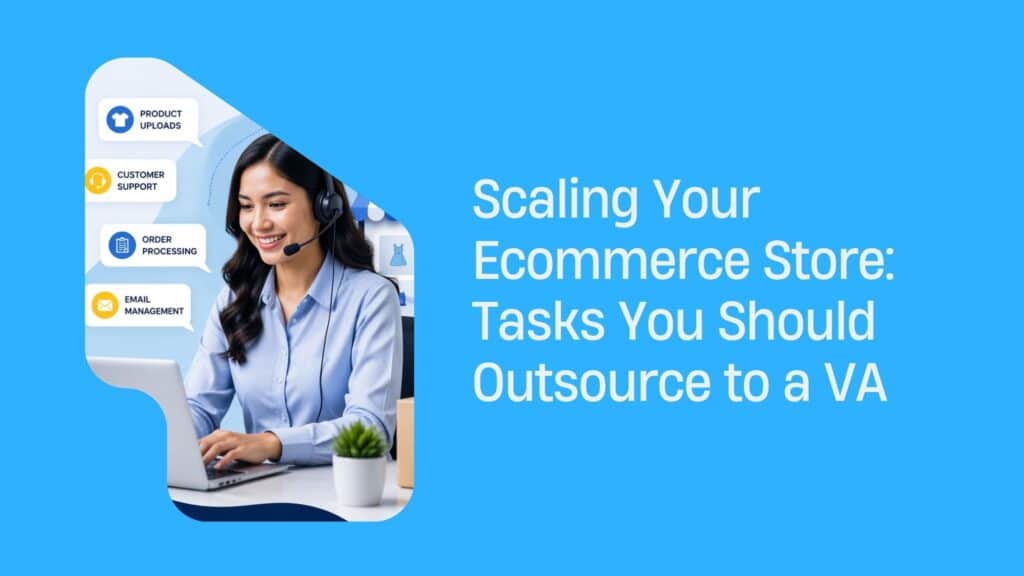
Running an ecommerce store in its early days is manageable. You handle customer emails in the morning, update product listings in the afternoon, and post on social media whenever you find a gap. It feels scrappy and direct, and that works fine when orders are slow.
But once the store starts growing, that same hands-on approach becomes the very thing holding you back. You spend more time on repetitive operational tasks than on decisions that actually move the business forward. Revenue goes up, but so does the chaos. The inbox never empties. The spreadsheets keep multiplying. And somewhere between order management and supplier follow-ups, you lose the time and headspace to think strategically.
This is the point where most ecommerce founders either plateau or burn out. And it is usually the point where outsourcing to a virtual assistant stops being optional.
Why Ecommerce Stores Are Ideal for VA Support
Virtual assistants are not just for executives or large companies. Ecommerce businesses, even small to mid-sized ones, generate a high volume of structured, repeatable work that does not require your personal judgment to complete.
Tasks like these follow a clear process, take time, and need consistency but they rarely need the founder doing them:
- Product research and catalog updates
- Order tracking and fulfillment coordination
- Review management and customer responses
- Data entry and spreadsheet maintenance
- Supplier follow-ups and documentation
When you outsource the right tasks, you free yourself to focus on growth: finding new suppliers, planning promotions, expanding to new channels, or building partnerships. That shift alone can change the trajectory of a store.
The Tasks Worth Outsourcing First
Not every task should go to a VA right away. The best starting point is work that is:
- Clearly defined and process-driven
- Frequently repeated with predictable outcomes
- Time-consuming but low on decision-making requirements
- Unlikely to involve sensitive financial or strategic calls
Here is where most ecommerce owners start seeing results.
Product Listing and Catalog Management
Creating and maintaining product listings is one of the most time-consuming parts of running an ecommerce store. None of the individual steps are difficult, but all of them take time.
What a VA can handle:
- Writing and formatting product descriptions
- Uploading images and setting categories
- Adjusting prices and updating specs
- Managing listings across platforms like Amazon, Shopify, Etsy, or Walmart Marketplace
- Keeping inventory counts updated in real time
This is especially valuable when you are launching new products. Instead of spending a full day setting up 20 SKUs, you hand over a brief, the images, and the specs, and the listings are ready for your review.
Customer Support and Order Management
Customer service is the task most ecommerce founders hold onto longest, and it is often the one they should let go of first.
Most customer queries follow predictable patterns:
- Where is my order?
- Can I exchange this item?
- My package arrived damaged. What should I do?
- I need to cancel my order.
A VA trained on your return policy, shipping timelines, and tone of voice can handle the majority of these without escalating to you. You stay in the loop for edge cases, refund approvals above a certain threshold, or any situation involving a negative public review.
Order management fits here too:
- Confirming orders and sending acknowledgment messages
- Following up on delayed shipments
- Coordinating with fulfillment partners
- Updating customers when tracking information changes
These tasks consume hours every week and can be fully delegated once your systems and SOPs are in place.
Supplier and Vendor Communication
If you source from multiple suppliers, the back-and-forth communication alone can eat a significant chunk of your week.
Routine supplier tasks a VA can take over:
- Sending reorder requests and confirming shipment details
- Following up on quality issues or missing documentation
- Tracking lead times and flagging delays early
- Maintaining a communication log so nothing slips through
You step in for negotiations or disputes, but the operational side runs without your daily involvement. This becomes even more important if you are sourcing internationally, where time zone differences can cause you to miss critical messages during business hours.
Inventory Tracking and Reorder Management
Stockouts cost sales. Overstocking ties up cash. Staying on top of inventory levels is essential, but it does not need to be you checking the numbers every day. A VA can manage:
- Monitoring stock levels across all your sales platforms
- Flagging SKUs approaching reorder points
- Maintaining a reorder schedule and sending reminders
- Updating inventory records in tools like Shopify, TradeGecko, or Cin7
Getting this right early is one of the clearest signs of a well-run ecommerce operation, and it is one of the easiest wins to unlock through delegation.
The 30-50% Mark: Where Delegation Starts to Compound
Once you have a VA handling product listings, customer support, and supplier communication, something interesting happens. You start seeing the gaps more clearly.
Tasks you had been unconsciously absorbing into your own workload become visible. This is typically when founders decide to hire a virtual assistant for additional hours or a second VA with different skills, because the first hire has already demonstrated that the model works.
The compounding effect is real. One well-trained VA covering operational tasks can unlock enough of your time to:
- Add a new revenue stream or product category
- Run a focused promotional campaign
- Explore wholesale or B2B opportunities
- Finally work on the parts of the business you had been postponing for months
More Tasks to Hand Off as You Grow: Once the foundation is stable, there is a second tier of tasks that virtual assistant services can help you with.
Review and Reputation Management
Customer reviews are a direct driver of conversion on most ecommerce platforms. Responding to reviews, both positive and negative, signals to new customers that you are attentive and trustworthy. But most founders either forget to respond or do not have the time to do it consistently.
A VA can:
- Monitor reviews across Amazon, Google, Trustpilot, and other platforms
- Respond to positive feedback with a personalized thank-you
- Escalate negative reviews to you for guidance before responding
- Track review sentiment over time and flag recurring complaints
This also extends to social mentions, comments on paid ads, and direct messages on Instagram or Facebook, all of which benefit from timely responses that most founders cannot always deliver.
Competitor and Market Research
Staying aware of what competitors are doing, how pricing is shifting, and what gaps exist in the market is important work. It is also work that requires time and structured observation rather than strategic insight.
Regular competitive audits a VA can run:
- Checking competitor pricing on key SKUs
- Monitoring new product launches in your category
- Tracking competitor ad activity through tools like Meta Ad Library
- Summarizing what reviewers are saying about competing products
You get a weekly brief with the highlights. You make the decisions. The legwork is done for you.
Social Media Scheduling and Basic Content Support
Most ecommerce brands need a consistent social media presence, but very few founders have the bandwidth to maintain one.
A VA can handle the execution layer:
- Scheduling posts using tools like Buffer or Later
- Writing captions based on your brand guidelines
- Repurposing content across formats: product photos into Pinterest pins, reviews into story slides, blog posts into carousels
- Responding to comments and DMs within a defined scope
This is not strategic creative work, but it is the consistent execution that most brands skip, and skipping it has a visible cost in reach and brand consistency.
Returns and Refund Processing
Returns are inevitable in ecommerce. The process of managing them is entirely procedural once your return policy is clear.
End-to-end return management a VA can own:
- Logging return requests and communicating next steps to customers
- Coordinating return shipments and confirming receipt
- Issuing refunds or store credits per your policy
- Updating inventory records after returns are processed
You review only situations that fall outside your standard policy. This keeps customers informed during a frustrating experience, reduces the chance of a negative review, and removes a task from your plate that has almost no upside to doing yourself.
How to Set Your VA Up for Success
Outsourcing only works when the handoff is clean. The most common reason VA arrangements fail is not the VA. It is the absence of clear instructions.
Before You Assign Any Task
- Document the process. A short Loom video, a written SOP, or a checklist in Notion or Trello gives your VA a reference point and reduces back-and-forth.
- Start with lower-stakes tasks. Build trust and calibrate quality before handing over anything customer-facing or time-sensitive.
- Review output closely in the first few weeks. Give feedback early rather than letting small errors accumulate into bigger problems.
Ongoing Communication
- Set a consistent check-in rhythm. A brief daily message or a weekly async update keeps things aligned without micromanaging.
- Use a shared task tracker so both of you always know what is pending, in progress, and done.
- Be specific when giving feedback so the VA can improve without needing constant course corrections.
Most VAs working in ecommerce are experienced professionals. Give them clear expectations and the right tools, and they will deliver.
What You Should Keep Doing Yourself
Outsourcing is not about removing yourself from the business. There are decisions that genuinely need you:
- Choosing which products to add or cut
- Setting pricing strategy and margins
- Managing key supplier relationships and negotiations
- Defining brand direction and positioning
- Making calls on major investments or partnerships
The goal is to protect your time for those decisions while everything else runs without you. That distinction between work that needs your judgment and work that just needs to get done is the foundation of a scalable ecommerce operation.
Final Thoughts
Growth is not just about more traffic or better ads. It is about building a business that can handle scale without falling apart operationally. When you are doing everything yourself, growth becomes a liability. More orders mean more stress, not more freedom.
The founders who scale well figure out early that their job is to build systems, not run them. Outsourcing to a VA is one of the most direct ways to make that shift. Start with the tasks that drain your time without requiring your judgment, build the process around them, and let someone capable take them off your plate.
Your store can grow. Make sure your capacity to manage it grows too.
Discover the Power of Inventory Source: An Introduction Video
Recent Articles
How to Normalize Shipping Methods Across Multiple Supplier
Learn how shipping method mapping normalizes supplier shipping codes, carriers, and delivery levels into one standard structure, so automated order routing selects the right service and keeps delivery estimates accurate across multiple suppliers.
Dropshipping Suppliers USA – Where to Find Them and How to Start
Learn where to find dropshipping suppliers USA, how to evaluate product data, shipping terms, and integration options, and the steps to start a US-based dropshipping business with reliable domestic fulfillment.

How to Calculate Accurate Delivery Estimates With Supplier Data
Learn how to calculate accurate ecommerce delivery estimates using supplier lead time, processing and cutoff schedules, business days, and carrier transit data, so you can set realistic delivery windows and reduce customer inquiries.