Technology Partners Powering Embedded Software for Connected Products
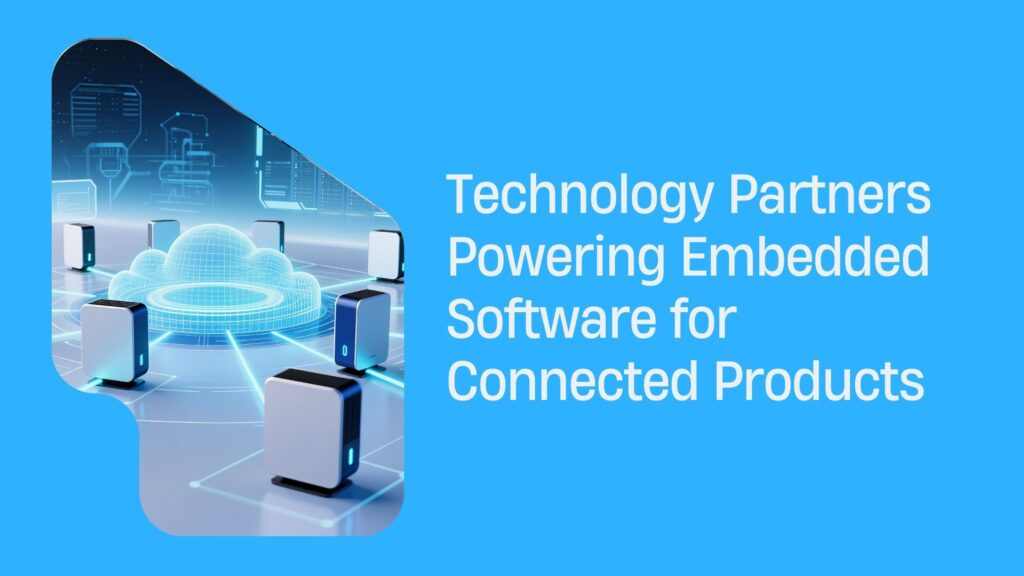
The market for embedded software development and Internet of Things (IoT) solutions is experiencing unprecedented growth, driven by the exponential proliferation of connected devices, edge computing adoption, and integration of artificial intelligence into embedded systems. The global embedded systems market is projected to grow from $178.15 billion in 2024 to $283.9 billion by 2034, representing a compound annual growth rate (CAGR) of approximately 5.85%. More significantly, the IoT connected machines market is expanding at 17.8% CAGR, expected to reach $770.94 billion by 2032.
This comprehensive analysis examines leading technology partners for IoT that power embedded systems engineering for connected products, with particular focus on companies demonstrating proven capabilities across hardware, firmware, cloud integration, and application development serving Fortune 500 enterprises, innovative startups, and government organizations.
Market Growth Drivers and Opportunities
The embedded software development services market – encompassing embedded firmware development, IoT platform integration, and connectivity solutions – is valued at $12.5 billion in 2024 and forecasted to grow to $23.48 billion by 2033 at an 8.2% CAGR. This growth is underpinned by several critical factors:
Connected Device Proliferation: With an estimated 21.1 billion connected IoT devices globally in 2025 growing at 14% annually, the demand for reliable firmware, connectivity management, and edge computing solutions continues to accelerate. Healthcare IoT devices, industrial sensors, and automotive systems dominate growth across verticals.
Edge Computing and AI Integration: Organizations are increasingly deploying artificial intelligence and machine learning directly on embedded devices to enable real-time decision-making without reliance on cloud connectivity, supporting faster ai automation implementation across connected systems. This reduces latency, enhances security, and improves operational resilience – critical requirements for autonomous systems, industrial automation, and remote monitoring applications.
Regulatory and Security Mandates: Compliance requirements for automotive safety (ISO 26262), medical device functionality (IEC 61508), and data protection (GDPR, regional privacy laws) are creating elevated demand for partners with expertise in security-first firmware development, secure boot mechanisms, and encrypted over-the-air (OTA) firmware updates.
Shift to Nearshoring and Distributed Delivery: Geopolitical tensions, supply chain vulnerabilities, and talent shortages are driving enterprise clients to establish partnerships with geographically dispersed engineering teams that can provide 24/7 support, cost optimization, and business continuity resilience.
1. Yalantis – Comprehensive Full-Cycle IoT and Embedded Systems Partner
Yalantis embedded development has positioned itself as a comprehensive embedded systems partner with deep expertise across hardware, firmware, cloud, and application development. Founded in 2008, the company has grown to 500+ employees and generates approximately $59.3-$63.6 million in annual revenue, demonstrating a remarkable 74% annual growth rate with 96% customer satisfaction.
End-to-End IoT Software Solutions Capabilities
Yalantis delivers comprehensive connected devices software spanning the entire technology stack:
Microcontroller and Hardware Integration: Complete expertise in microcontroller selection and firmware development using C, C++, and Rust programming languages, peripheral and sensor integration across diverse protocols, real-time operating systems implementation (FreeRTOS, Zephyr, ThreadX), power management optimization for battery-powered devices, and secure bootloader and OTA firmware update mechanisms ensuring reliable remote updates.
Connectivity and Protocol Implementation: Full-spectrum wireless connectivity solutions including Bluetooth Low Energy (BLE), Wi-Fi, LTE, LoRaWAN, Zigbee, Thread, and cellular modems. Implementation of MQTT messaging protocols for reliable device-to-cloud communication, with expertise in selecting optimal connectivity solutions based on power consumption, range, and data throughput requirements.
Cloud Platform Integration: Seamless integration with major IoT cloud platforms, including AWS IoT Core, Azure IoT Hub, and Google Cloud IoT. Development of cloud-native device messaging and data pipelines, device management and provisioning systems, remote firmware update services, API development for system integration with ERP, CRM, and MES platforms, plus comprehensive reliability and observability architecture.
Security Architecture: Multi-layered security approach including threat modeling across device-cloud-application layers, encryption and key management systems, secure device onboarding and lifecycle management, trusted execution environment (TEE) implementation, continuous monitoring and incident response capabilities, and penetration testing and hardening services.
Edge AI and Machine Learning: Integration of machine learning models directly on embedded devices for local real-time decision-making without constant cloud connectivity, computer vision and real-time signal processing for embedded vision systems, predictive analytics and anomaly detection models, and optimization for low-power systems through quantization and model compression techniques.
Rust Programming Expertise: Five-plus years of production embedded delivery using Rust, migration pathways from legacy C/C++ code to Rust with mixed-language support capabilities, team training and code review services, and performance tuning aligned with memory safety and security objectives as recommended by the U.S. White House Executive Order 14028.
Market Positioning and Competitive Advantages
Yalantis competes in the mid-market segment by revenue but delivers specialized embedded solutions that compete effectively against larger enterprise competitors. The company’s nearshoring model – European headquarters with distributed teams – appeals to enterprises seeking time-zone coverage and cost optimization (30-50% savings versus Western labor costs) without compromising quality or communication standards.
Key competitive advantages include end-to-end integration capability from microcontroller selection through cloud analytics, Rust programming leadership positioning for next-generation memory-safe critical systems, balanced vertical specialization enabling cross-pollination of approaches between healthcare and industrial sectors, and demonstrated execution capability with 100+ connected products delivered across multiple verticals.
2. Softeq – Global Embedded Systems Pioneer
Softeq, established in 1997 in Houston, Texas, is one of the industry’s longest-established embedded systems specialists. With 250-500+ employees globally and an estimated revenue of $50-$100 million, Softeq represents the mature, diversified player with deep expertise across hardware, firmware, and industrial IoT software.
The company’s strength lies in full-stack hardware-to-firmware integration, particularly in complex, safety-critical applications. Softeq excels in developing human-machine interfaces (HMIs), real-time embedded systems, and wearable device solutions. Notable projects include firmware development for smart bassinets, pet activity monitoring collars, and industrial automation equipment.
With offices in Houston, Munich, Vilnius, and Guadalajara, Softeq provides global delivery capability supporting clients across North America, Europe, and Latin America. The company’s 27-year track record demonstrates sustainability and institutional knowledge in navigating technology evolution cycles, with particular strength in automotive, medical device development, consumer electronics, and industrial automation.
3. N-iX – Enterprise-Scale Global Delivery Partner
N-iX, founded in 2002 and headquartered in Valletta, Malta, represents the large-scale enterprise delivery model. With 2,400+ employees distributed across USA, UK, Ukraine, Poland, Bulgaria, Romania, Colombia, and the Asia-Pacific regions, N-iX brings institutional capability to complex, multi-team projects.
The company has secured partnerships with Fortune 500 companies, telecommunications giants, automotive manufacturers, and financial services enterprises, earning recognition from Forrester, ISG, and IAOP, validating its capability maturity and service delivery excellence.
N-iX’s embedded division delivers firmware development, Linux kernel porting, real-time OS optimization, connectivity protocol implementation (BLE, Wi-Fi, LTE), and hardware-software integration services. The company has successfully managed projects involving OEM-based Linux gateways, cloud platform integration with Google Cloud IoT and AWS IoT, and Android application development for field operations.
The company’s ability to staff large teams with specialized expertise, manage complex multi-site projects, and provide 24/7 global support makes it attractive to multinational enterprises undertaking digital transformation initiatives.
4. Sigma Technology Group – Automotive and Electrification Specialist
Sigma Technology Group, with 20+ years of experience and operations across Hungary, Norway, Germany, and Ukraine, has carved out specialization in automotive embedded systems and electrification. The company specializes in autonomous driving systems, battery management, vehicle electrification, active safety systems (ADAS), and connected vehicle platforms – addressing the automotive industry’s transformation toward electric and autonomous vehicles.
Sigma Technology holds ISO 9001, ISO 27001, and ISO 14001 certifications, with additional expertise in ISO 26262 (functional safety for automotive systems), a critical requirement for safety-critical embedded development. The company operates dedicated embedded systems labs for functional testing, prototype validation, power electronics analysis, and environmental testing – providing clients confidence in design verification before production deployment.
5. GlobalLogic – Enterprise Digital Engineering at Scale
GlobalLogic, founded in 2000 and now a Hitachi Group company, represents the enterprise-scale digital engineering powerhouse. With 32,000+ employees globally and an estimated revenue of $1.5–$7.8 billion, GlobalLogic operates in a different scale tier than competitors.
GlobalLogic’s embedded engineering division addresses semiconductor design support, low-level firmware development, Linux kernel customization, device driver development, RTOS optimization, and complex IoT ecosystem design. The company supports major semiconductor manufacturers (MCU, ARM SoC, FPGA vendors) with BSP/SDK development and verification infrastructure.
Integration within Hitachi’s broader digital transformation ecosystem provides GlobalLogic clients access to enterprise IT solutions, data analytics platforms, and operational technology (OT) transformation capabilities – advantageous for clients undergoing Industry 4.0 modernization. The company has established expertise in embedding machine learning models on edge devices, computer vision systems, and edge AI accelerators.
6. SaM Solutions – European Excellence in Embedded Engineering
SaM Solutions, headquartered in Gilching, Germany with 30+ years of experience and 800+ employees, brings European engineering discipline to embedded firmware development. The company specializes in bare metal programming, bootloader development, OS kernel customization, board support package (BSP) creation, device driver development, and firmware optimization for power consumption and performance.
SaM Solutions has extensive experience with diverse hardware architectures including ARM, X86, PowerPC, AVR, and PIC. Beyond firmware, the company delivers web and cloud integration, mobile application development, and comprehensive testing services, enabling clients to pursue full-stack IoT projects through a single vendor relationship.
The company’s dedicated QA team specializes in embedded software testing using advanced tools including Wireshark for packet analysis, iPerf for performance testing, and custom Python/Bash automation frameworks, ensuring production-grade reliability. With offices and delivery centers across Western and Eastern Europe and in the USA, SaM Solutions provides nearshoring opportunities for European enterprises.
7. Leobit – Emerging Specialized IoT Focus Partner
Leobit, founded in 2014 with headquarters in Lviv, Ukraine, and representative offices in Austin (USA), Tallinn (Estonia), and Krakow (Poland), represents the emerging, specialized embedded development partner. With 170+ employees and $13.5 million in annual revenue, Leobit operates at a smaller scale than enterprise competitors but maintains focus on delivering high-quality embedded and IoT application development to mid-market technology companies and startups.
The company emphasizes dedicated development teams, team extension engagements, and project-based delivery with transparent processes and flexible commercial structures. Core offerings include embedded software development for IoT devices, firmware development for sensors and wearables, Linux device drivers, and cloud integration services, particularly serving streaming media, telecom, and IoT sensor companies.
Leobit’s nearshoring model – Eastern European delivery center with Western offices – enables competitive hourly rates ($22–$65/hour depending on seniority) while maintaining Western service standards and communication practices.
8. Lemberg Solutions – Leading Embedded Systems and Custom Software Engineering Provider
Lemberg Solutions, established in 2005, is a renowned software engineering and consulting firm with a strong reputation for delivering embedded systems solutions. With a team of over 200 experts and operations across Ukraine, Europe, and the US, Lemberg Solutions has established itself as a trusted partner for enterprise-grade projects, working with globally recognized organizations such as Syngenta Group, Voltfang, UNDP, Caltech, the European Commission, and German Autolabs.
The company excels in providing full-stack solutions, combining expertise in Digital, Embedded, Cloud, and AI to develop cross-layered systems. Lemberg Solutions has a particular focus on energy, agritech, manufacturing & Industrial IoT, and healthcare, helping clients integrate complex systems from concept to deployment seamlessly. Their ISO 27001 and ISO 9001 certifications ensure structured delivery processes and strong data protection practices.
Key Competitive Differentiators
Analysis across these technology partners for IoT reveals distinct positioning:
- Firmware Development Excellence: Softeq and SaM Solutions demonstrate the highest mastery in low-level firmware engineering, bootloader optimization, and real-time system design – reflecting their deep technical heritage and historical focus on embedded-only solutions.
- Global Scale and Enterprise Delivery: N-iX and GlobalLogic excel in managing large, distributed teams and serving multinational clients with complex project coordination, multiple delivery sites, and 24/7 support requirements.
- Automotive Specialization: Sigma Technology and Softeq lead in automotive-specific expertise, reflecting their deep involvement in ADAS, vehicle electrification, and ISO 26262 safety-critical system development.
- Healthcare and Medical Compliance: Yalantis, Softeq, and N-iX demonstrate strong capabilities in healthcare IoT development, regulatory compliance (FDA, IEC 61508), and remote patient monitoring systems.
- AI/ML Integration on Edge Devices: GlobalLogic and Yalantis lead in embedding machine learning models, computer vision, and edge AI acceleration – critical for emerging use cases in autonomous systems, predictive maintenance, and intelligent monitoring.
Strategic Market Insights
Emerging Opportunities: The rapid growth of IoT-connected machines (17.8% CAGR) and edge AI adoption creates substantial demand for partners with expertise in real-time inference, constrained device optimization, and secure edge-to-cloud connectivity. Companies successfully positioning as “chip-to-cloud” integrators will capture a disproportionate share of enterprise digital transformation budgets.
Regulatory Complexity as Competitive Moat: As compliance requirements intensify (ISO 26262 for automotive, FDA for medical devices, GDPR for data privacy), companies with established regulatory expertise and certified processes will defend pricing and customer relationships more effectively than generalist competitors.
Talent and Nearshoring Dynamics: Nearshoring to Eastern Europe and Latin America provides significant cost arbitrage while maintaining quality standards. However, geopolitical considerations require evaluation of business continuity and long-term stability.
Conclusion
The competitive landscape demonstrates no single dominant player – instead, differentiation occurs through vertical specialization, geographic presence, compliance certifications, and customer relationship depth. For enterprises evaluating embedded software development partners, the decision should prioritize alignment with vertical expertise (automotive, medical, industrial), cultural fit with delivery models, and demonstrated capabilities in emerging areas, including edge AI, autonomous systems, and battery management, rather than relying solely on company size or revenue as primary selection criteria.
The market’s 8.2-17.8% growth rates across segments ensure continued opportunity for both established players and emerging specialists throughout the 2025-2032 period, with competitive advantage accruing to those technology partners demonstrating comprehensive chip-to-cloud capabilities, regulatory expertise, and proven execution in complex, safety-critical applications.
Discover the Power of Inventory Source: An Introduction Video
Recent Articles

How to Normalize Shipping Methods Across Multiple Supplier
Learn how shipping method mapping normalizes supplier shipping codes, carriers, and delivery levels into one standard structure, so automated order routing selects the right service and keeps delivery estimates accurate across multiple suppliers.

Dropshipping Suppliers USA – Where to Find Them and How to Start
Learn where to find dropshipping suppliers USA, how to evaluate product data, shipping terms, and integration options, and the steps to start a US-based dropshipping business with reliable domestic fulfillment.

How to Calculate Accurate Delivery Estimates With Supplier Data
Learn how to calculate accurate ecommerce delivery estimates using supplier lead time, processing and cutoff schedules, business days, and carrier transit data, so you can set realistic delivery windows and reduce customer inquiries.