How to Choose the Right Wholesale Hardware and Industrial Supplier

In the hardware and industrial goods world, a reliable supply chain isn’t optional—it’s essential. Whether you’re running a retail store, managing projects, or selling through ecommerce and dropshipping, delays or low-quality stock can directly impact revenue and customer trust.
The right wholesale hardware distributor ensures consistent product quality, competitive pricing, and reliable fulfillment. With more businesses shifting online in 2026, choosing a supplier that supports automation, dropshipping, and scalable operations is more important than ever.
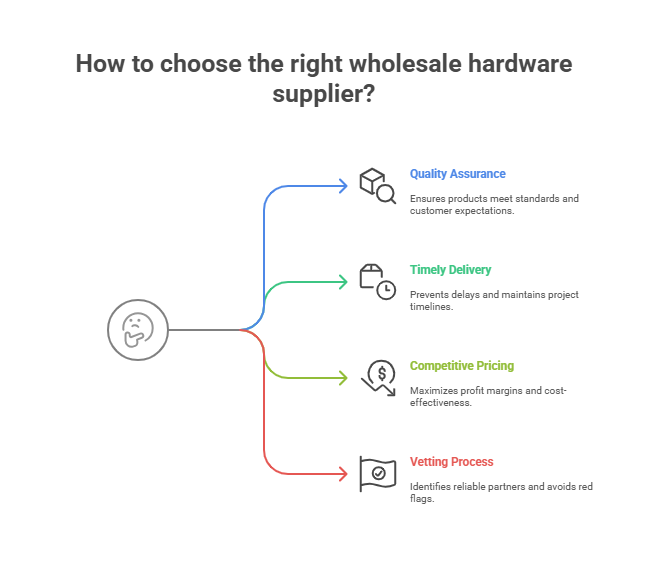
Buyer Persona — Choosing the Right Supplier Based on Your Business Type
Not all buyers need the same type of supplier. Your choice depends heavily on your business model.
Contractors & Construction Businesses
- Need bulk inventory and consistent supply
- Prefer local or domestic distributors for fast delivery
- Focus on durability, certifications, and pricing contracts
Retail Store Owners
- Require product variety and steady restocking
- Benefit from flexible MOQs and bulk discounts
- Need reliable shipping timelines
Ecommerce & Dropshipping Sellers
- Prefer low or no MOQ suppliers
- Need dropshipping support and automation tools
- Focus on product data feeds, inventory sync, and fast fulfillment
Supplier Evaluation Scorecard (Use This Before You Commit)
Use this scorecard to compare wholesale hardware suppliers objectively:
| Criteria | Supplier A | Supplier B | Supplier C |
| MOQ (Minimum Order Quantity) | Low | Medium | High |
| Lead Time | Fast | Morderate | Slow |
| Dropshipping Support | Yes | No | |
| Returns Policy | Flexible | Standard | Strict |
| Brand Authorization | Verified | Unverified | |
| Pricing Competitiveness | Fast | Medium | Low |
| Inventory Depth | Yes | No | |
| Shipping Speed | Strong | Average | Poor |
How to Use This Scorecard
- Score each supplier objectively instead of relying on price alone
- Prioritize dropshipping + low MOQ if you’re running an ecommerce store
- Focus on lead time + inventory depth for consistent fulfillment
- Eliminate suppliers with weak returns policies or no verification
- Shortlist top 2–3 suppliers before placing test orders
Pro Tip: The best supplier isn’t the cheapest—it’s the one that minimizes risk while supporting long-term growth.
Understanding the Role of a Wholesale Hardware Supplier
What Wholesale Distributors Do
Wholesale distributors act as the middlemen between manufacturers and retailers. They buy products in bulk from manufacturers and sell them to businesses at discounted rates. A wholesale hardware distributor focuses specifically on tools, construction materials, fasteners, safety gear, and other industrial products. They store inventory, manage logistics, and often offer flexible pricing based on order volume. Distributors help retailers and contractors access a wide range of products without dealing directly with multiple manufacturers.
How they Fit into Your Supply Chain
In your supply chain, a distributor bridges the gap between product creation and end sales. Instead of sourcing each product from a different manufacturer, you can get everything from a single distributor. This simplifies ordering, speeds up delivery, and cuts down on administrative work. For businesses that need consistent restocking, working with a wholesale hardware distributor ensures timely availability and dependable supply.
Difference Between Distributors, Manufacturers, and Resellers
| Role | What They Do | Ideal For |
| Manufacturer | Makes the product | Businesses with large order volumes |
| Distributor | Buys in bulk from manufacturers, sells to retailers | Stores, resellers, or contractors needing product variety |
| Reseller | Buys from distributors or wholesalers, sells at retail | Direct-to-consumer sales |
How Wholesale Hardware Suppliers Differ from General Wholesalers
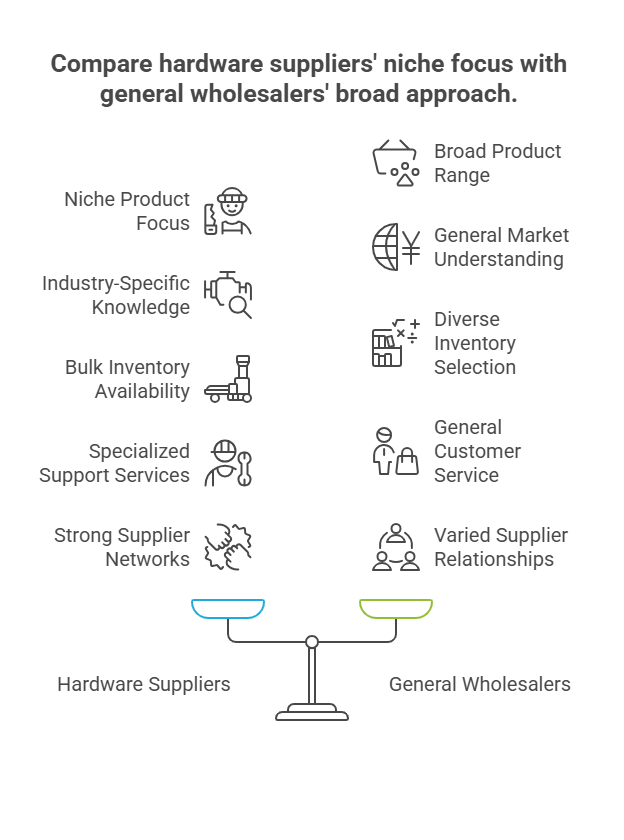
- Niche Focus – Hardware suppliers specialize in industrial goods like power tools, fasteners, adhesives, and heavy-duty materials. General wholesalers may sell anything from clothing to electronics.
- Industry Knowledge – Hardware suppliers understand technical specs, safety standards, and use-cases specific to the construction and manufacturing industries.
- Bulk Availability – They often stock large volumes of heavy or specialized inventory tailored for commercial use.
- Support Services – Many offer services like product sourcing, private labeling, and procurement for construction projects or supply contracts.
- Stronger Supplier Networks – They usually work closely with well-known hardware and tool brands, ensuring product reliability and long-term availability.
Top 5 Wholesale Hardware Suppliers (2026)
These suppliers are widely used across retail, industrial, and ecommerce businesses:
D&H Distributing
D&H Distributing is a long-established U.S.-based supplier with over a century of distribution experience across multiple product categories. Known for its partner-first approach, it supports businesses of all sizes with dedicated account representatives, no minimum order requirements, and full dropshipping capabilities. Its broad catalog and seamless integration make it ideal for ecommerce sellers scaling across multiple marketplaces.
Key Features:
- No minimum order requirement, making it ideal for small and scaling businesses
- Supports dropshipping with direct-to-customer shipping across USA and Canada efficiently
- Integrates seamlessly with Inventory Source for automated inventory and order management
- Dedicated account representatives provide personalized support and strategic business guidance consistently
- Multi-category catalog includes electronics, tools, automotive, and general merchandise products
Petra Industries
Petra Industries is a US-based wholesale distributor specializing in consumer electronics accessories, tools, and general merchandise. With over 500 leading brands, it supports retailers and ecommerce sellers with a no-minimum order model and full dropshipping capability. Integrated with Inventory Source, Petra enables automated workflows, making it ideal for scalable online businesses across Amazon and eBay channels.
Key Features:
- No minimum order requirement, ideal for small and scaling businesses
- Supports dropshipping with direct-to-customer shipping across United States efficiently
- Integrates with Inventory Source for automated inventory and order management
- Allows selling on Amazon and eBay without platform restrictions
- Wide catalog featuring electronics, tools, and general merchandise products
The Wholesale House
The Wholesale House is a USA-based supplier built for ecommerce sellers who need flexibility and scale. With no minimum order requirement and full dropshipping support, it’s ideal for testing and expanding product lines. Its private catalog spans tools, electronics, and outdoor goods, while seamless Inventory Source integration enables automated operations across multiple sales channels, including Amazon and eBay.
Key Features:
- No minimum order requirement, ideal for testing new product lines
- Full dropshipping support with direct-to-customer shipping across North America
- Inventory Source integration enables automation of listings, inventory, and orders
- Supports multi-channel selling including Amazon and eBay marketplaces seamlessly
- Wide catalog covering tools, electronics, outdoor, tactical, and automotive products
Costway
Costway is a versatile U.S.-based wholesale supplier offering a wide catalog across hardware, home, and general merchandise categories. With no minimum order requirement and full dropshipping support, it’s well-suited for ecommerce sellers. Its integration with Inventory Source enables automation, while competitive pricing and multi-channel support make it a flexible partner for scaling online businesses efficiently.
Key Features:
- No minimum order requirement supports flexible inventory and product testing
- Full dropshipping support with direct-to-customer shipping across United States
- Integration with Inventory Source enables automated product and order syncing
- Wide product catalog across hardware, home, electronics, and general merchandise
- Supports selling on Amazon and eBay for multi-channel ecommerce expansion
Turn14 Distribution
Turn14 Distribution is a U.S.-based performance warehouse distributor specializing in automotive tools and niche vehicle markets. With strategically located facilities in Pennsylvania, Texas, and Nevada, it ensures fast nationwide fulfillment. The supplier supports dropshipping with no minimum order requirement, making it ideal for ecommerce sellers seeking flexibility, speed, and access to full product lines.
Key Features:
- No minimum order requirement, ideal for flexible ecommerce inventory management
- U.S.-based warehouses enable faster shipping and reliable delivery timelines
- Supports dropshipping with seamless Inventory Source integration for automation
- Strong focus on niche automotive performance and specialized vehicle markets
- Allows Amazon selling but restricts resale on eBay platform
What to Look for in a Wholesale Industrial Supply Partner
Product Range and Category Fit
When choosing a wholesale hardware distributor, make sure they carry the exact tools, equipment, or industrial parts your business needs. Whether you’re selling power tools, fasteners, plumbing supplies, or electrical components, the right supplier should offer reliable access to the core products your customers want.
Look for suppliers who not only stock what you need now but can also support you as your product line grows. A well-matched product catalog will help you avoid unnecessary sourcing from multiple vendors and reduce fulfillment delays.
Importance of catalog depth and specialty focus:
- Look for a wide selection within your niche (e.g., full range of drill bits, not just basic sets)
- Specialized suppliers usually have better product knowledge and quality assurance
- A deeper catalog means more variety in size, material, and price points
- Easier to scale your product offerings without changing suppliers
- Reduces out-of-stock risks by having multiple alternatives for similar items
- Helps with cross-selling and bundling opportunities for related products
Dropshipping Capability (Critical in 2026)
If you’re running an online store, this is non-negotiable.
Look for suppliers that:
- Ship directly to customers (blind shipping)
- Provide real-time inventory feeds
- Offer automated order routing
- Support integrations with platforms like Shopify, WooCommerce, or BigCommerce
Pricing and Minimum Order Quantities (MOQs)
Compare Pricing Tiers Across Suppliers
When choosing a wholesale industrial supply partner, pricing and minimum order quantities (MOQs) play a big role in your profit margins and order flexibility. It’s important to compare what different wholesale hardware suppliers are offering, so you’re not overpaying or committing to more inventory than you need.
How to Evaluate MOQs and Bulk Discount Structures
| Supplier | Unit Price (1–99 units) | Unit Price (100–499 units) | Unit Price (500+ units) | Bulk Discount Offered |
| Supplier A | $12.50 | $11.00 | $9.75 | Yes (10 percent on 500+) |
| Supplier B | $13.00 | $10.80 | $9.50 | Yes (Flat 5 percent over 200 units) |
| Supplier C | $12.00 | $10.50 | $9.25 | Yes (Tiered discounts) |
- Look at price breaks and where they begin.
- Choose suppliers who offer savings that match your typical order size.
- Flat-rate discounts might be better for small businesses just starting out.
How to Evaluate MOQs and Bulk Discount Structures
- Start Small – If you’re testing a new supplier, a lower MOQ (like 10–50 units) is ideal.
- Look for Flexibility – Good suppliers often let you mix product types to meet the MOQ.
- Understand the Terms – Some discounts only apply to identical SKUs. Others apply to total order value.
- Negotiate When Possible – If you’re close to the next tier, some suppliers might offer a better rate.
- Check if MOQs Include Shipping – A low price may not include logistics, so calculate the real per-unit cost.
Shipping Speeds and Fulfillment Options
When choosing a wholesale industrial supply partner, pricing and minimum order quantities (MOQs) directly affect your profit margins and flexibility. Along with unit cost, it’s important to understand shipping structure and fulfillment options—especially when dealing with either domestic or international suppliers.
Domestic vs International Shipping – Comparison Table
| Feature | Domestic Shipping | International Shipping |
| Shipping Speed | 2–7 days (often faster with local carriers) | 7–30+ days depending on location and method |
| Shipping Cost | Lower and more predictable | Higher costs, especially for bulky items |
| Import Duties & Customs | None within the same country | May include tariffs, duties, and taxes |
| Tracking & Logistics | Easier to track, more reliable | May involve multiple carriers and delays |
| Communication | Easier coordination, same time zone | Time zone differences may delay communication |
| Returns & Replacements | Faster processing and lower return costs | Return logistics are slower and more expensive |
Working with domestic wholesale hardware suppliers often means faster fulfillment and easier customer support, while international sources may offer better pricing but require longer planning cycle
- Drop Shipping – You don’t hold inventory. The supplier ships directly to your customer. Great for low overhead, but you have less control over packaging, branding, and shipping times.
- Third-Party Fulfillment – You send your stock to a fulfillment center (like ShipBob or Amazon FBA). They handle picking, packing, and shipping. More control than dropshipping and usually faster for domestic orders.
- Lead Times – Always ask about average lead times—how long it takes from placing the order to shipping. For custom or bulk orders, lead times can range from a few days to several weeks.
Certifications and Quality Assurance
When choosing a wholesale industrial supply partner, it’s important to check if they follow recognized industry standards. Certifications like ISO 9001 show that a supplier maintains consistent quality and has solid operational processes in place.
For hardware or technical parts, certifications related to safety, environmental compliance, or product-specific standards can also matter. These give you confidence that the products meet both legal and performance expectations.
Certified suppliers are more likely to follow proper manufacturing, inspection, and delivery practices—reducing the risk of defects or returns in the long run.
When reviewing a potential supplier, make sure they offer:
- Clear return policies – Know how returns are handled, including timelines, costs, and conditions for return approval.
- Product warranties – Check if they offer manufacturer or distributor warranties for tools and industrial parts.
- Damage handling – Ask how the supplier manages damaged or faulty shipments.
- Satisfaction guarantees – Some wholesale hardware suppliers provide a quality or satisfaction guarantee—this adds an extra layer of trust.
- Written documentation – Always get policies in writing to avoid confusion later.
- Responsiveness – A good supplier should clearly explain their process if something goes wrong with a product batch.
These policies reflect how much a supplier stands behind their products and how they handle post-sale issues.
Customer Service and Support
Good customer service is just as important as product quality when working with a wholesale industrial supply partner. The right support can save you time, prevent order delays, and keep your business running smoothly.
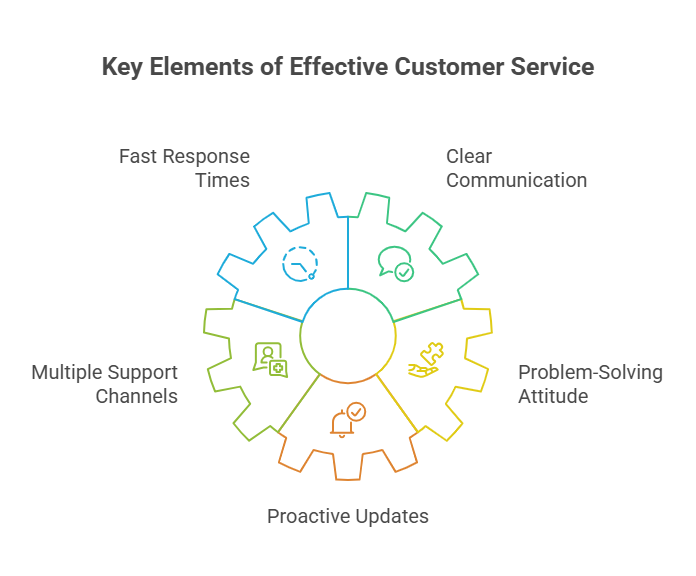
Here’s what to look for:
- Fast response times – You shouldn’t have to wait days for answers. Look for suppliers who reply within 24 hours.
- Clear communication – Emails and messages should be simple, professional, and easy to understand. Miscommunication leads to costly mistakes.
- Multiple support channels – Live chat, phone, and email give flexibility. Avoid suppliers with limited or outdated contact options.
- Problem-solving attitude – Whether it’s a wrong item, delay, or damaged shipment, the supplier should take responsibility and act quickly.
- Proactive updates – Good wholesale hardware suppliers keep you informed about inventory changes, backorders, or shipping delays without you needing to ask.
Dedicated Reps vs General Support
| Feature | Dedicated Account Rep | General Customer Support |
| Point of Contact | One person assigned to your account | Random support agent per query |
| Response Time | Usually faster, priority support | Can be slower, based on volume |
| Product Knowledge | Familiar with your business and needs | Basic, limited to general info |
| Relationship Building | Builds trust and long-term support | One-time, transactional contact |
| Custom Request or Deals | More likely to assist and negotiate | Less flexibility and authority |
| Ideal For | Growing or high-volume businesses | Small or one-time buyers |
Warning Signs to Watch Out
When choosing a wholesale hardware distributor or wholesale industrial supply partner, it’s important to spot red flags early. Here are key warning signs that a supplier may not be reliable
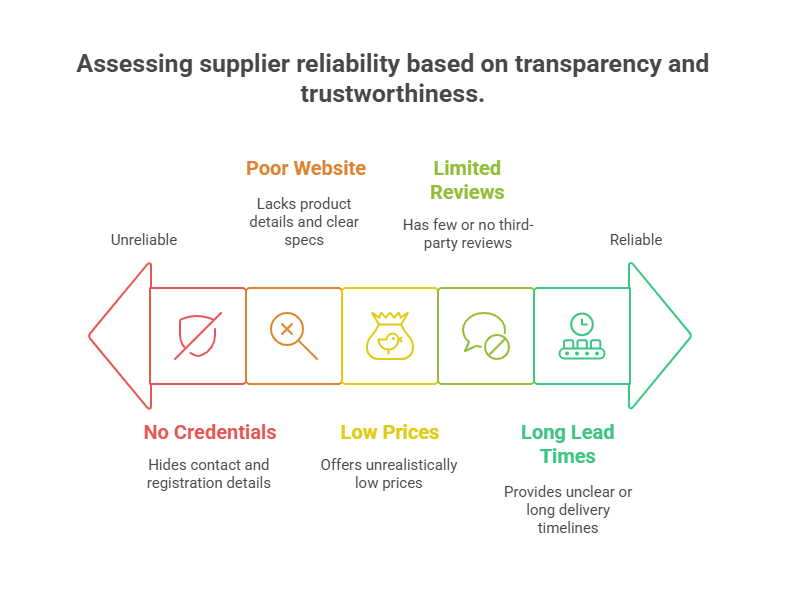
No Business Credentials or Contact Info
If a supplier doesn’t provide a physical address, phone number, or company registration details, that’s a major red flag. A legitimate wholesale hardware supplier should list full contact info on their website. Always check for a valid business license or tax ID if you’re working directly with them.
Poor Website, Vague Product Descriptions
If the website looks outdated, loads slowly, or lacks detailed product info, proceed with caution. Reliable wholesale hardware distributors take time to present their products clearly. Look for clear specs, materials, dimensions, and usage details. Avoid sites that post generic or copy-pasted descriptions.
Unrealistically Low Prices
If prices seem too good to be true, they probably are. Extremely low pricing can indicate low product quality, unreliable fulfillment, or hidden costs later. Compare prices across several wholesale industrial supply vendors to get a sense of the market rate. Price should reflect quality, not just undercut competitors.
Limited Reviews or Bad Reputation
Search for third-party reviews on Google, Trustpilot, or industry forums. A lack of feedback could mean the supplier is new—or hiding something. Watch for repeated complaints about late deliveries, wrong products, or poor communication. Reliable wholesale hardware suppliers will have a reputation you can verify.
Long or Unclear Lead Times
If a supplier can’t give you an accurate delivery timeline, that’s a concern. Delays can hurt your business and damage customer trust. Make sure they’re upfront about shipping times and have a system to track orders. Reliable suppliers offer clear estimates and regular updates on fulfillment.
In addition to existing red flags, watch for:
Added Red Flags
- No dropshipping or ecommerce support
- No inventory sync or outdated stock data
- अस्पष्ट return/refund policies
- No brand authorization (risk of counterfeit goods)
- Poor communication during pre-sales
How to Spot Unreliable Hardware Suppliers (Quick Checklist)
Avoid suppliers who:
- Refuse to provide samples
- Pressure for large upfront orders
- Have inconsistent pricing
- Lack verifiable reviews
- Cannot confirm lead times
How to Vet a New Wholesale Supplier
Choosing the right supplier is a big step for your business. Here’s how to properly vet any potential wholesale hardware distributor or wholesale industrial supply partner before committing:
Ask for Product Samples
- Always request samples before placing a large order.
- This helps you check product quality, packaging, and accuracy.
- Make sure the item matches the specs, materials, and performance claims.
- It’s a simple way to avoid surprises later.
Review Business Documentation
- Legitimate wholesale hardware suppliers should have proper business registration.
- Ask for tax ID numbers, resale certificates, or any relevant licenses.
- This shows they’re a real business, not just a middleman or scam.
- Confirm payment terms, shipping policies, and return conditions upfront.
Check References or Client Feedback
- Ask the supplier for references or case studies from past buyers.
- Look for reviews on B2B platforms or supplier directories.
- Be cautious of vendors with no reviews or a poor online presence.
- Direct feedback from other businesses offers useful insights.
Place a Test Order to Evaluate Performance
- Start small with a low-risk order.
- Track how fast they ship, how they package, and how accurate the order is.
- Look at the tracking details and communication throughout the process.
- This test helps you gauge how they’ll handle regular volume.
Research on Directories or B2B Platforms
Finding the right wholesale hardware distributor or wholesale industrial supply partner starts with proper research—and B2B platforms are a great place to begin. These directories connect buyers with suppliers and often come with built-in trust signals that help you make better choices. Here’s how to use them effectively:
Use Trusted Directories Like ThomasNet, Alibaba, or Inventory Source
Start with well-known B2B platforms that specialize in connecting businesses with verified suppliers.
- ThomasNet is great for U.S.-based industrial suppliers and manufacturers.
- Alibaba connects you to global suppliers but is especially popular for large-scale imports.
- Inventory Source offers dropship automation and access to pre-vetted wholesale networks. As businesses seek comprehensive B2B wholesale distribution solutions, platforms like these provide integrated tools for managing supplier relationships, automating inventory updates, and streamlining order processing across multiple channels.
Stick with these platforms instead of random websites. They provide better data, stronger verification, and built-in tools to compare suppliers.
These Platforms Often Verify Wholesale Industrial Supply Sellers
Where to Find Reliable Suppliers (Ecommerce-Focused)
Beyond traditional directories:
- Dropshipping platforms (Inventory Source, Doba)
- Supplier automation tools
- Niche industrial marketplaces
- Trade shows + digital B2B expos
Most trusted directories vet suppliers before listing them.
- Look for platforms that check business licenses, factory audits, or certifications.
- Verified suppliers are less likely to be scams or low-quality sources.
- Some platforms show a “Verified Supplier” badge or “Gold Supplier” status (as seen on Alibaba).
This extra layer of screening helps you avoid unreliable or fraudulent wholesale hardware suppliers.
Check How Long the Supplier Has Been Listed and Their Response Rate
Experience and communication are key when choosing a supplier.
- A supplier that’s been on the platform for several years is often more stable.
- Check their join date or “years in business” on their profile.
- Look for a high response rate (usually above 85%) and quick average reply times.
- Slow replies or no communication can lead to problems once you start working together.
These signs give you insight into how easy it will be to work with the supplier over time.
Verified Badges, Supplier Ratings, and Company Details Build Trust
Always review the full supplier profile before making contact.
- Look for badges that show third-party verification or business license approval.
- Ratings and reviews from other buyers help gauge performance and product quality.
- Detailed company info (like location, factory photos, staff size) adds more credibility.
- A lack of information or incomplete profile is usually a red flag.
All these checks help you feel more confident before reaching out to a wholesale hardware distributor or wholesale industrial supply seller.
Best Practices for Building Long-Term Supplier Relationships
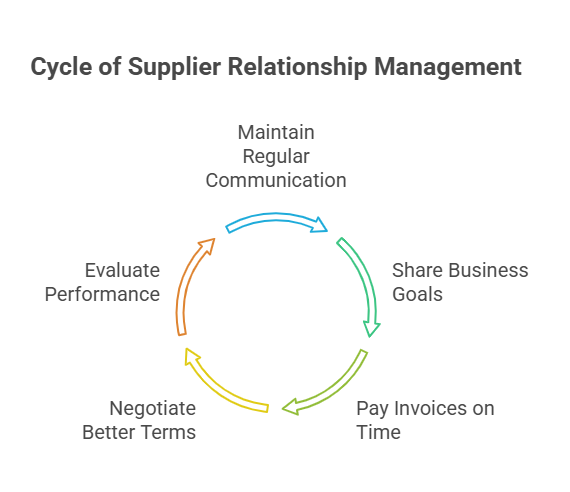
Maintain Regular Communication
Keeping in touch with your supplier is key to avoiding misunderstandings. Don’t wait for issues to happen—check in often about stock updates, shipping delays, or product changes. A quick email or scheduled call helps keep things smooth and shows that you’re serious about the partnership. Whether you work with a local wholesale hardware distributor or international partner, clear and regular communication builds trust over time.
Share Business Goals and Expectations
Be upfront about your plans. Let your supplier know if you’re planning to expand your store, launch new product lines, or change your order volumes. When they understand your goals, they’re more likely to support you—offering better suggestions, deals, or flexibility. Many wholesale hardware suppliers value long-term clients who are transparent and growth-focused.
Pay Invoices on Time
It’s simple but important. Paying your bills on time shows reliability and keeps the relationship strong. Suppliers prioritize businesses that respect terms and deadlines. If you’re buying from wholesale industrial supply sources regularly, late payments can quickly hurt your reputation. On-time payments also help when it’s time to negotiate better rates or request flexible terms.
Negotiate Better Terms Over Time
Once you’ve worked with a supplier for a while and placed consistent orders, it’s okay to ask for better pricing, lower MOQs, or faster shipping. Strong relationships give you more leverage to negotiate perks that help your margins. Make sure to time these conversations after a few successful transactions. Many wholesale hardware distributors are open to rewarding loyal and consistent buyers.
Evaluate Performance Periodically
Don’t assume everything’s running perfectly just because there are no complaints. Set a schedule—maybe once every quarter—to review your supplier’s performance. Check product quality, order accuracy, delivery times, and communication. If any area is slipping, bring it up early before it becomes a bigger issue. This also gives you a reason to explore other wholesale hardware suppliers if your current one stops meeting expectations.
Where to Find Reliable Wholesale Hardware and Industrial Supply Distributors
Online Directories
If you’re looking to partner with a wholesale hardware distributor, online directories are a great starting point. They give access to thousands of vetted suppliers across categories. Here’s how some top platforms can help:
Alibaba
- One of the largest B2B platforms for global sourcing
- Ideal for bulk buying directly from manufacturers
- Offers a wide range of hardware and industrial tools
- Use filters to check supplier certifications and transaction history
- Great for comparing quotes and negotiating custom deals
Global Sources
- Focuses more on verified, export-ready suppliers
- Strong presence of industrial goods and electronics
- Allows buyers to find niche or high-volume wholesale hardware distributor options
- Helpful for quality control with strict vetting standards
These directories help you explore supplier options, compare prices, and vet potential partners with ease.
US-Based Wholesale Platforms
If you’re looking for a wholesale hardware distributor in the U.S., these platforms are a great place to start:
Wholesale Central

- A large directory that connects retailers with verified U.S.-based wholesalers
- You can browse by product category, including tools and industrial supplies
- No membership fee or signup required
- Useful for finding niche or smaller distributors not listed elsewhere
Doba

- A dropshipping platform with a wide catalog of products, including hardware and tools
- Offers real-time inventory sync, automated order processing, and supplier integration
- Ideal for new sellers who want fewer operational tasks
- Paid plans available based on your business size and needs
Inventory Source

- A powerful tool for automation and supplier integration
- Partners with several hardware and industrial supply distributors
- Allows automatic product uploads, inventory updates, and order routing
- Great for scaling your store while staying organized
- Offers both directory access and full automation services
These platforms help streamline your search and connect you with reliable suppliers across the U.S.
Industry Trade Shows and B2B Networks
Trade shows and B2B networking events are great places to meet face-to-face with potential suppliers. They give you direct access to a wide range of manufacturers, brands, and distributors—all under one roof. You can touch and compare products, ask questions, and build real relationships.
Here’s how to make the most of them:
- Start conversations early – Talk to suppliers before the event if possible. It helps to schedule meetings in advance.
- Ask specific questions – Don’t just collect brochures. Ask about product range, MOQs, shipping, and pricing.
- Look for niche suppliers – Smaller booths often have unique or specialty products. These suppliers are great for finding items competitors might not sell.
- Bring business cards – Even in a digital age, they help make connections. Digital business cards can also help you stand out and make follow-ups more convenient.
- Follow up after the event – Send a short email thanking them and asking for a catalog or pricing sheet.
- Join B2B networks – Platforms like ThomasNet or industry-specific directories can help you find a reliable wholesale hardware distributor even after the trade show.
Trade shows help you go beyond just browsing websites and give you a better feel for a supplier’s reliability and quality.
Matching Your Business Needs with the Right Partner
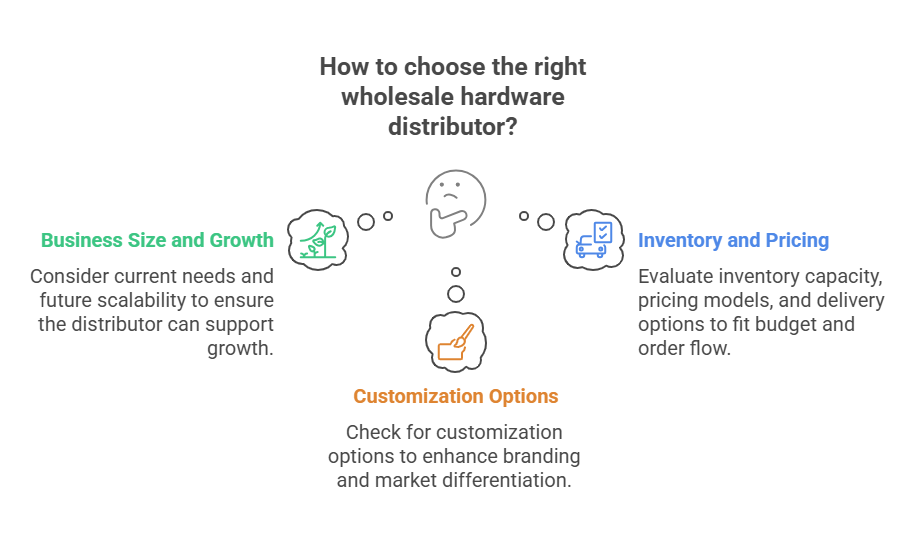
Consider Your Business Size and Growth Goals
Start by looking at where your business is now and where you want it to go. A small startup may not need massive inventory or complex systems, while a growing company needs a supplier that can scale. Choose a wholesale hardware distributor that fits your current needs but can also support future growth. Think about order volume, restocking speed, and whether they can keep up as your demand increases.
Match by Inventory Capacity, Pricing Model, and Delivery Options
Make sure the supplier’s inventory aligns with what you plan to sell. If you need fast-moving items, check stock availability and turnover rates. Compare pricing structures and see if bulk discounts apply. Some suppliers offer flat-rate shipping, while others vary by region or weight. Choose a setup that fits your budget and order flow. Reliable delivery is just as important as price.
Flexibility in Product Customization or Branding
If branding matters to your business, find out if the supplier allows for custom packaging, labeling, or private labeling. Some wholesale hardware distributors offer these options to help your products stand out. This is especially useful if you’re building a branded experience or want more control over how items look when shipped to customers. Flexibility can give you an edge in a crowded market.
Final Thoughts
Choosing the right wholesale hardware supplier isn’t just about pricing—it’s about reliability, scalability, and alignment with your business model.
For ecommerce sellers, dropshipping capabilities and automation are now just as important as product quality. For contractors and retailers, consistency and bulk pricing still dominate.
The best approach:
- Start small
- Test thoroughly
- Score suppliers objectively
- Scale with proven partners
A strong supplier relationship doesn’t just support your business—it becomes a competitive advantage
FAQ Section
What is the minimum order for wholesale hardware?
Minimum order quantities (MOQs) vary widely. Some suppliers require 100+ units, while dropshipping suppliers may allow single-unit orders. Always choose based on your business model.
Do hardware distributors support dropshipping?
Yes, but not all. Modern suppliers increasingly support dropshipping, especially those integrated with ecommerce platforms or automation tools.
What’s the difference between a hardware distributor and a wholesaler?
A distributor typically works directly with manufacturers and offers branded products, while a wholesaler may source from multiple distributors and resell at bulk prices.
Discover the Power of Inventory Source: An Introduction Video
Recent Articles

How to Manage Multiple Suppliers Without Increasing Operational Costs
Learn how to manage multiple suppliers without increasing operational costs, using standardized onboarding, centralized data, automated catalog and inventory updates, supplier-based order routing, pricing rules, and exception-based workflows to scale your supplier network efficiently.

Inventory Accuracy – Best Practices for Multi-Channel Sellers
Learn how multichannel sellers maintain inventory accuracy using a central stock source, standardized SKU mapping, synchronization rules, available-to-sell logic, buffers, and supplier feed validation to prevent overselling and keep stock consistent across every channel.

How to Reduce Overselling Across Multiple Sales Channels
Learn how to prevent overselling across multiple sales channels using a central inventory source, real-time synchronization, stock buffers, reservation logic, accurate SKU mapping, and supplier feed validation to keep availability accurate everywhere you sell.
Discover the Power of Inventory Source: An Introduction Video
Recent Articles
How to Manage Multiple Suppliers Without Increasing Operational Costs
Learn how to manage multiple suppliers without increasing operational costs, using standardized onboarding, centralized data, automated catalog and inventory updates, supplier-based order routing, pricing rules, and exception-based workflows to scale your supplier network efficiently.
Inventory Accuracy – Best Practices for Multi-Channel Sellers
Learn how multichannel sellers maintain inventory accuracy using a central stock source, standardized SKU mapping, synchronization rules, available-to-sell logic, buffers, and supplier feed validation to prevent overselling and keep stock consistent across every channel.
How to Reduce Overselling Across Multiple Sales Channels
Learn how to prevent overselling across multiple sales channels using a central inventory source, real-time synchronization, stock buffers, reservation logic, accurate SKU mapping, and supplier feed validation to keep availability accurate everywhere you sell.