How to Accept Ethereum in Your Dropshipping Store: A Step-by-Step Guide
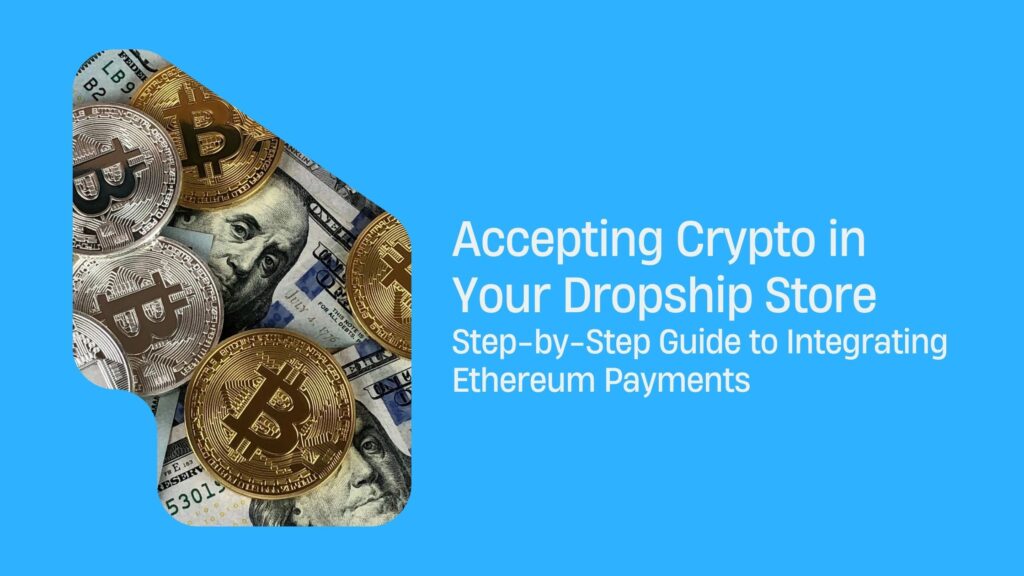
Accepting Ethereum payments in your dropshipping business means that you get to skip the long waiting periods associated with banks and reach the tech-savvy global market. The following technical requirements must be met to implement digital asset payments in your business.
The digital economy is really shifting toward flexible systems that support international buyers without the friction of legacy finance. Because settlement occurs on-chain, payment finality and speed really become predictable variables rather than external banking dependencies.
The Ethereum price really has a major impact on consumers’ spending power and market liquidity. This is one of the most important aspects you need to consider when modifying the prices in your store and the transaction time limit.
Integrating this asset ensures your store remains competitive in a landscape where decentralized finance is becoming a practical infrastructure layer for cross-border trade rather than a niche alternative.
The Business Case for Ethereum Integration
Adding new payment methods will directly help reduce abandoned cart rates and appeal to the global customer base that prefers decentralized assets. The usual credit card companies tend to charge very high cross-border charges.
Ethereum transactions are push transactions, so the customer initiates the transaction. This eliminates the risk of unauthorized refund transactions, giving you a predictable cash flow for your business.
As per the report published by Binance on January 17, 2025, the total market capitalization of the crypto market increased by 96.2% from last year, 2024. This is a clear indicator that the market has seen widespread participation, not mere speculation for short-term gains.
Instead, the validation would need to be done in every area, but this trend in crypto adoption is creating a new paradigm: crypto payments now correlate with the norm. This makes the incorporation of Ethereum a sign that your business is operationally up to date, not experimental.
Selecting a Professional Payment Gateway
You must select a payment processor that bridges the blockchain and your storefront backend. A professional gateway really manages technical tasks, such as generating unique wallet addresses per order and automatically verifying transaction confirmations.
When evaluating providers, prioritize low transaction fees, real-time status updates and settlement flexibility.
Most drop shippers favor gateways that provide instant conversion of fiat money. This feature protects profit margins from volatility by locking in the exchange rate at the time of sale. Rather than framing this choice as speculative risk management, it functions as a standard treasury control similar to multi-currency pricing.
Institutional confidence supports this operational model. A Binance Research report dated July 17, 2025, showed that corporate digital-asset adoption continued to expand among global firms. This broader trend reinforces the legitimacy of crypto gateways without requiring repeated justification elsewhere in the payment flow.
Technical Steps for Store Integration
Adding Ethereum support to your store is a very simple process that does not require any coding. The majority of platforms support crypto gateways. Below is a step-by-step guide for a hassle-free process:
- Install the gateway plugin from your platform marketplace
- Complete business verification to meet compliance standards
- Connect API keys to enable secure communication
- Enable Ethereum as an accepted payment method
- Run a live test transaction with a small amount
By keeping these steps isolated to the setup phase, technical validation does not bleed into customer-facing discussions later in the article. This separation ensures clarity between backend operations and frontend experience.
Improving the Customer Checkout Experience
A complex checkout system is a deterrent to consumers, even when there is variety in payment methods. A crypto payment process should be as intuitive as a credit card payment.
Show the Ethereum equivalent of the order total right beside the fiat currency price. This way, the buyer does not really have to wait until the last minute to see the exact Ethereum equivalent that they need to pay. Include a QR code that the buyer can use to quickly transfer the funds.
You should also include “Ethereum Accepted” in your checkout pages and your site’s footers. Instead of repeating the concept of adoption rates in this section, you can rely on the previous work to establish familiarity with your customers. They are more likely to see these icons as standard payment options rather than new additions.
Security and Operational Reliability
Security really underpins every successful dropshipping operation. When accepting Ethereum through a reputable gateway, private keys and wallet credentials never touch your servers. The gateway manages transaction security, reducing exposure and liability.
Enable two-factor authentication on all administrative accounts tied to your payment processor. This step protects both financial access and configuration controls.
It is also really essential to set up a refund policy. Given the fluctuating nature of Ethereum network fees during periods of high traffic, it is common for merchants to process refunds based on the fiat currency value at the time of purchase.
By discussing security, refunds and reliability in one section, your article prevents the repetition of arguments related to risk while still delivering practical tips. This helps your store prepare for scalable, world-accessible commerce.
Discover the Power of Inventory Source: An Introduction Video
Recent Articles

Licensing, Traceability & API Best Practices When Dropshipping Firearms Accessories
Explore compliance-first API and traceability strategies for dropshipping firearms accessories across suppliers and channels.
Beyond Compliance: Automating Firearms Supplier Integration for Dropshipping in 2026
Explore firearms dropshipping automation with Inventory Source, including FFL validation, feed controls, and compliant order routing.
Adult Product Taxonomy Standardization for Safe Listings Across Channels
Learn how adult product taxonomy standardization reduces listing suppression, compliance risk, and channel conflicts.