Dropshipping Food Products: Supplier Integration and Shelf-Life Management
Operational Complexity in Food Dropshipping
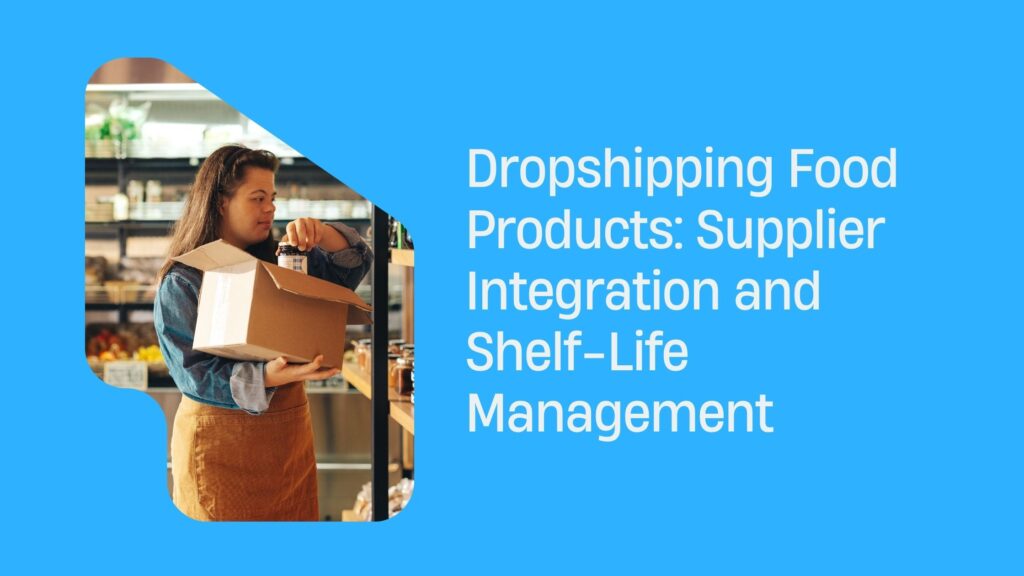
Food dropshipping operations require strict control over inventory freshness, supplier coordination, and logistics to ensure safe and compliant product delivery.
Growth of Online Food Ecommerce
The expansion of ecommerce has increased demand for dropshipping food across packaged, specialty, and subscription-based categories. Consumers expect fast delivery and consistent product quality. This growth has encouraged suppliers to offer digital catalogs and integration systems, enabling scalable online distribution of food products across multiple regions.
Unique Challenges in Dropshipping Food
Managing dropshipping food involves several operational constraints that require structured systems:
- Perishable inventory requires strict monitoring of expiration dates and batch-level tracking to avoid selling expired or near-expiry products
- Supplier inconsistency can affect product quality, packaging standards, and delivery timelines
- Complex storage requirements, including temperature control, impact fulfillment processes
- Limited delivery windows for perishable items increase logistics pressure
- Regulatory compliance for food safety and labeling must be maintained across all listings
- Inventory synchronization must reflect real-time stock and expiry status
These challenges increase the need for precise coordination across systems.
Importance of Shelf-Life and Supplier Coordination
Shelf-life management is critical in dropshipping food operations. Accurate tracking of product expiration dates ensures safe order fulfillment. Supplier coordination must include batch-level inventory data, storage conditions, and timely updates. This alignment helps maintain product quality, reduce waste, and support consistent delivery standards across distributed supply chains.
Structure of Food Product Supply Chains
Food supply chains require structured coordination between suppliers, storage systems, and logistics to maintain quality, safety, and timely delivery.
Categories of Food Products in Ecommerce
- Packaged Foods – Includes snacks, canned goods, and ready-to-eat items. These products have longer shelf life and simpler storage requirements in dropshipping food operations.
- Perishable Foods – Fresh produce, dairy, and meat products require strict temperature control and fast delivery timelines.
- Beverages – Covers bottled drinks, juices, and health beverages. Requires handling based on packaging type and volume.
- Specialty and Organic Products – Includes health-focused or certified organic items. Often requires supplier verification and controlled sourcing.
- Bulk and B2B Supplies – Large quantity food items for commercial buyers. Requires efficient inventory planning and logistics coordination.
Perishable vs Non-Perishable Product Handling
| Factor | Perishable Products | Non-Perishable Products |
| Shelf Life | Short duration, requires expiration tracking | Long duration, minimal expiry risk |
| Storage | Requires refrigeration or temperature control | Stored at room temperature |
| Shipping | Fast delivery required | Flexible delivery timelines |
| Risk Level | High spoilage risk | Low spoilage risk |
| Handling | Strict compliance and monitoring | Standard handling processes |
| Inventory Turnover | High turnover required | Moderate turnover acceptable |
Supply Chain Flow from Supplier to Customer
The supply chain in dropshipping food involves coordinated steps from sourcing to final delivery. Products move through supplier systems, storage facilities, and logistics networks before reaching customers.
The stages include:
- Supplier sourcing and product availability updates
- Inventory synchronization with ecommerce platforms
- Order routing based on stock location and expiry dates
- Packaging and dispatch with compliance checks
- Final delivery within defined timeframes
This structured flow ensures product quality, accurate inventory tracking, and reliable fulfillment across food supply chains.
Supplier Integration Models in Food Dropshipping
Supplier integration ensures accurate data exchange, inventory visibility, and shelf-life tracking required for stable and compliant food ecommerce operations.
API-Based Supplier Integration Systems
API-based systems enable real-time communication between ecommerce platforms and supplier databases in dropshipping food operations. These integrations improve accuracy in inventory, pricing, and product availability. For example, food businesses using Food ERP Software can connect ecommerce, supplier data, inventory, pricing, and order workflows to reduce manual errors and keep product availability accurate.
Following are the functions:
- Real-time inventory updates with batch-level tracking
- Automatic synchronization of product details, including expiration data
- Instant order transmission to suppliers for faster fulfillment
- Continuous status updates for shipment and delivery tracking
API integration reduces delays and manual errors. It supports consistent data flow across systems and ensures that perishable product information remains accurate throughout the supply chain.
Feed-Based Product and Inventory Connections
Feed-based integrations provide structured data exchange using scheduled updates for inventory, pricing, and product details across supplier systems.
- Supplier feeds, typically in CSV or XML formats, deliver product data at fixed intervals. These feeds include inventory levels, pricing updates, and product attributes. Scheduled processing ensures that ecommerce platforms receive updated information for accurate product listings and stock visibility.
- Feed systems must support data mapping and normalization. Product attributes such as expiration dates, packaging, and storage instructions need consistent formatting. This ensures reliable synchronization between supplier systems and ecommerce platforms in dropshipping food operations.
Multi-Supplier Coordination and Data Consistency
Managing multiple suppliers requires consistent data standards and synchronized workflows to maintain inventory accuracy and product availability across systems.
- Each supplier may provide data in different formats and update frequencies. Standardization layers convert this data into a unified structure. This ensures consistent product information, accurate inventory levels, and reliable expiration tracking across all suppliers.
- Coordinated systems must manage inventory allocation and order routing across suppliers. Automated workflows select suppliers based on stock availability and expiration timelines. This helps maintain product quality and supports efficient fulfillment in dropshipping food environments.
Supplier Reliability and Quality Assurance
Reliable supplier performance and strict quality control are essential for managing perishable inventory, ensuring food safety, and maintaining consistent operations in dropshipping food supply chains.
Evaluating Supplier Consistency and Performance
- Assess supplier fulfillment consistency by tracking order accuracy, delivery timelines, and batch-level product availability. Reliable suppliers must maintain stable stock levels and meet agreed service benchmarks across multiple order cycles.
- Monitor historical performance data, including delay frequency, damaged shipments, and replacement rates. Consistent performance metrics help identify suppliers suitable for long-term dropshipping food operations.
- Evaluate supplier infrastructure such as storage facilities, handling processes, and packaging capabilities. Suppliers must support perishable goods with controlled environments and proper logistics coordination.
- Verify certifications, compliance records, and food safety standards. Suppliers should meet regulatory requirements for food handling, labeling, and distribution across regions.
- Establish performance monitoring systems with automated alerts for delays, stock inconsistencies, or quality issues to maintain operational reliability.
Quality Control and Product Handling Standards
Strict quality control and standardized handling procedures are required to maintain product integrity, ensure compliance, and support safe delivery in dropshipping food supply chains.
- Suppliers must follow defined quality control processes, including batch testing, expiration validation, and packaging inspections. These checks ensure that only compliant and safe products enter the fulfillment cycle within dropshipping food operations.
- Product handling standards should include temperature control, contamination prevention, and secure packaging. These processes reduce spoilage risks and maintain product quality during storage, transit, and final delivery.
Managing Supplier Risks in Food Distribution
Managing supplier risks in dropshipping food requires continuous monitoring and structured mitigation strategies. Supplier-related disruptions can impact product quality, delivery timelines, and regulatory compliance.
Risk Management Practices:
- Diversifying suppliers to reduce dependency on a single source
- Implementing backup suppliers for critical product categories
- Monitoring expiration-related risks across inventory batches
- Tracking supplier compliance with food safety regulations
- Using automated systems to flag inconsistencies in product quality or delivery
A structured risk management framework ensures stable operations by identifying potential disruptions early and maintaining consistent supply chain performance across food distribution networks.
Inventory Synchronization and Expiration Tracking
Accurate inventory synchronization and expiration tracking are critical in food ecommerce. Systems must ensure real-time stock visibility, batch-level monitoring, and controlled product availability to maintain quality, compliance, and fulfillment accuracy.
Real-Time Inventory Updates for Food Products
Real-time inventory updates are essential in dropshipping food operations to maintain stock accuracy and prevent order failures. Automated systems must continuously sync supplier inventory with ecommerce platforms.
- API-based inventory updates for instant stock visibility
- Scheduled sync intervals where real-time integration is not available
- Centralized inventory dashboards for multi-supplier monitoring
- Automatic stock adjustments after order placement
These systems reduce overselling risks and ensure that only available products are listed. Accurate synchronization also supports efficient order routing and minimizes cancellations caused by outdated inventory data.
Tracking Expiration Dates Across Batches
Tracking expiration dates across batches requires structured data systems and supplier coordination.
- Each inventory batch must include manufacturing and expiration date metadata
- Supplier feeds should provide batch-level details for accurate tracking
- Systems must map batch data to individual product listings
- FIFO (First-In, First-Out) logic should prioritize older inventory
- Alerts should notify when batches approach expiration thresholds
- Expiry data must be updated during inventory sync cycles
- Batch tracking systems should support audit and compliance requirements
These controls ensure accurate monitoring of product lifecycle across distributed supplier networks.
Preventing Sale of Near-Expiry Products
Preventing the sale of near-expiry products is critical for maintaining product quality and customer trust in dropshipping food systems. Automated rules must control product availability based on expiration timelines.
- Defining minimum shelf-life thresholds before allowing product listing
- Automatically removing or hiding products nearing expiration
- Routing orders to suppliers with fresher inventory batches
- Using dynamic inventory filters based on expiry data
These mechanisms ensure that customers receive products within acceptable shelf-life limits while maintaining compliance with food safety standards and reducing return risks.
Shelf-Life Management in Food Dropshipping
Shelf-life management is critical in food ecommerce operations, requiring precise inventory tracking, batch control, and supplier coordination to ensure product freshness, compliance, and efficient fulfillment across distributed supply chains.
Shelf-Life Constraints in Ecommerce Operations
Shelf-life limitations directly impact inventory planning and product availability in dropshipping food operations. Perishable items require strict control over storage duration, handling conditions, and delivery timelines.
Constraints are:
- Limited selling window before expiration reduces inventory flexibility
- Supplier delays increase risk of near-expiry stock reaching customers
- Variations in shelf-life across products complicate catalog management
- Regulatory requirements demand accurate expiry labeling and tracking
These constraints require systems that monitor expiration dates in real time. Businesses must ensure that products listed online have sufficient remaining shelf life. Failure to manage these factors leads to waste, refunds, and compliance risks.
Batch Management and Product Rotation Systems
Batch tracking and product rotation systems ensure that inventory is managed based on expiry timelines and stock movement efficiency.
- Batch management systems assign unique identifiers to each product lot. These systems track manufacturing dates, expiration timelines, and supplier details. Automated tracking ensures that inventory records remain accurate and supports decision-making for listing, pricing, and fulfillment of food products.
- Product rotation systems prioritize older inventory using first-expiry-first-out logic. Automation ensures that products with shorter shelf life are sold first. This reduces wastage, maintains product quality, and supports efficient inventory utilization across supplier networks and fulfillment operations.
Impact of Shelf-Life on Order Fulfillment
Shelf-life directly influences order processing and delivery decisions in dropshipping food systems.
Operational Impacts:
- Orders must be routed to suppliers with the freshest available stock
- Delivery timelines must align with remaining product shelf life
- Automated checks prevent dispatch of near-expiry items
- Inventory systems must block listings for expired or unsafe products
- Faster fulfillment methods may be required for perishable goods
These controls ensure that customers receive products within acceptable freshness limits. Structured shelf-life management improves order accuracy and reduces operational risks.
Storage Requirements and Handling Conditions
Shelf-life management is critical in food ecommerce, requiring precise tracking systems, supplier coordination, and inventory controls to ensure product freshness, regulatory compliance, and efficient fulfillment across distributed supply chains.
- Expiry Tracking Systems – In dropshipping food, expiration tracking must be integrated into inventory systems. Each product batch should include manufacturing and expiry dates. Automated systems track remaining shelf life and prevent listing or selling products nearing expiration. This reduces compliance risks and customer dissatisfaction.
- Batch-Level Inventory Control – Food products must be managed at batch level rather than SKU level. Each batch may have different expiry timelines. Systems should allocate orders based on earliest expiry first (FEFO – First Expiry, First Out). This ensures optimal inventory rotation and minimizes waste.
- Supplier Coordination – Suppliers must provide accurate batch data, including production dates and shelf-life duration. Integration with supplier feeds should include expiry metadata. Reliable communication ensures that outdated or near-expiry stock is not introduced into the active catalog.
- Order Routing Based on Shelf Life – Order routing systems should prioritize suppliers with fresher inventory and shorter delivery times. This is essential in dropshipping food, where delayed delivery reduces usable shelf life. Routing logic must consider both inventory availability and expiry constraints.
- Storage and Handling Conditions – Shelf life is directly affected by storage conditions such as temperature and humidity. Systems should account for storage requirements during supplier selection and logistics planning. Improper handling can reduce product life before delivery.
- Compliance and Labeling – Regulatory requirements mandate clear labeling of expiry dates and storage instructions. Automated systems must ensure that product listings reflect accurate shelf-life information. This supports transparency and regulatory compliance.
- Monitoring and Alerts – Continuous monitoring systems should trigger alerts for low shelf-life inventory. Notifications allow timely removal, discounting, or replacement of products. This maintains operational efficiency and prevents losses in dropshipping food operations.
Order Routing and Fulfillment Coordination
Efficient order routing in food ecommerce requires real-time inventory visibility, expiration tracking, and coordinated logistics to ensure timely delivery while maintaining product quality and regulatory compliance standards.
- Routing Logic – In dropshipping food, order routing must prioritize supplier proximity, product availability, and remaining shelf life. Systems should automatically assign orders to suppliers holding fresher inventory to reduce spoilage risk. Rule-based routing ensures consistent decision-making across multiple suppliers.
- Expiration-Based Allocation – Fulfillment systems must integrate expiration tracking at batch level. Orders should be routed based on first-expiry-first-out logic. This approach minimizes waste and prevents shipment of near-expiry products. Accurate batch data is critical for reliable routing decisions.
- Delivery Time Constraints – Perishable products require strict delivery timelines. Routing systems must consider transit duration and regional logistics capabilities. Suppliers closer to the delivery location should be prioritized to maintain product freshness and reduce delays.
- Supplier Coordination – Real-time communication with suppliers is essential. Systems should confirm stock availability, packaging readiness, and dispatch timelines before finalizing order routing. This reduces fulfillment errors and improves delivery consistency.
- Logistics Integration – Integration with logistics providers allows automated shipment scheduling and tracking updates. Delivery status, estimated arrival times, and handling requirements must be synchronized with ecommerce platforms to maintain transparency.
- Inventory Synchronization – Continuous inventory updates ensure accurate routing decisions. Systems must adjust stock levels immediately after order allocation to prevent overselling and maintain data consistency across suppliers.
- Compliance and Handling – Routing systems must account for food safety regulations. Packaging standards, temperature requirements, and labeling rules should be integrated into fulfillment workflows to ensure compliant deliveries.
Automation Systems for Food Dropshipping Operations
Automation systems are essential for managing inventory accuracy, expiration tracking, and supplier coordination in food ecommerce operations. Structured workflows ensure consistent data synchronization, efficient order processing, and compliance with storage and handling requirements.
- Inventory Monitoring – In dropshipping food, automated systems track stock levels across suppliers in real time. These systems ensure accurate product availability and prevent overselling, especially for perishable and batch-based inventory.
- Expiration Tracking – Automation tools monitor product shelf life using batch-level data. Expiry dates are mapped to inventory records, ensuring that near-expiry products are excluded from listings or prioritized for clearance.
- Supplier Data Sync – Supplier integrations update product data, pricing, and availability through APIs or feed-based systems. This ensures that food product listings remain accurate and consistent across ecommerce platforms.
- Order Processing – Automated workflows route orders based on stock availability and product expiry. Systems prioritize suppliers with fresher inventory and faster delivery timelines to maintain product quality during transit.
- Compliance Controls – Automation enforces storage and handling rules by validating product categories against shipping and regulatory requirements. This ensures that sensitive food items meet safety standards during fulfillment.
- Operational Monitoring – Monitoring tools track system errors, delayed updates, and supplier inconsistencies. These controls maintain stable dropshipping food operations and ensure reliable coordination across inventory, suppliers, and logistics networks.
Building a Scalable Food Dropshipping Infrastructure
Scalable infrastructure in food ecommerce requires accurate inventory tracking, supplier coordination, and strict shelf-life control to ensure safe delivery, regulatory compliance, and consistent fulfillment across distributed supply chains.
- Supplier Integration – Reliable dropshipping food operations depend on stable supplier connections. API integrations and structured feeds ensure continuous updates for product availability, batch details, and expiration timelines across all listings.
- Expiration Tracking – Systems must track batch-level expiration dates. Automated alerts prevent sale of near-expiry products. This ensures compliance and reduces product wastage in inventory cycles.
- Inventory Accuracy – Real-time synchronization across suppliers avoids stock inconsistencies. Accurate inventory data supports correct order routing and prevents fulfillment delays for perishable goods.
- Storage Coordination – Infrastructure must align with storage requirements such as temperature control and packaging standards. This ensures product quality is maintained during storage and transit.
- Order Routing Logic – Orders should be routed based on proximity, stock levels, and expiration priority. This reduces delivery time and ensures fresher product delivery.
- Operational Monitoring – Monitoring systems track delays, stock mismatches, and compliance risks. Continuous system checks improve reliability in dropshipping food supply chains and maintain consistent operational performance.
Managing dropshipping food requires strict control over supplier coordination, inventory accuracy, and shelf-life tracking. Food products introduce additional complexity due to expiration limits and storage requirements. Systems must track batch-level data to prevent the sale of expired or near-expiry items.
Reliable supplier integration ensures consistent product quality and accurate inventory updates across platforms. Storage conditions, including temperature control and packaging standards, must be aligned with regulatory requirements. Order routing should consider product freshness and delivery timelines to maintain product integrity.
Automation plays a critical role in monitoring expiration dates, synchronizing supplier data, and maintaining operational consistency. Structured workflows help manage perishable inventory while ensuring accurate fulfillment and compliance with food safety standards.
Some businesses require custom integrations that go beyond standard supplier connections. Flxpoint supports advanced integration needs by connecting multiple suppliers, ecommerce platforms, ERPs, and marketplaces through flexible workflows. It helps automate inventory updates, product data synchronization, pricing, and order routing across complex sales operations. This makes it a suitable solution for businesses with unique integration requirements and expanding multichannel operations.
Discover the Power of Inventory Source: An Introduction Video
Recent Articles
Dropshipping Suppliers USA – Where to Find Them and How to Start
Learn where to find dropshipping suppliers USA, how to evaluate product data, shipping terms, and integration options, and the steps to start a US-based dropshipping business with reliable domestic fulfillment.
How to Calculate Accurate Delivery Estimates With Supplier Data
Learn how to calculate accurate ecommerce delivery estimates using supplier lead time, processing and cutoff schedules, business days, and carrier transit data, so you can set realistic delivery windows and reduce customer inquiries.
Supplier Order Cutoff Times – How They Affect Ecommerce Fulfillment
Learn how supplier order cutoff times affect ecommerce fulfillment, covering cutoff versus processing time, delivery promises, order automation, managing multiple suppliers across time zones, and the metrics that keep dispatch schedules reliable.