Top Medical Equipment Suppliers and Medical Supplies Distributors You Can Trust in 2026
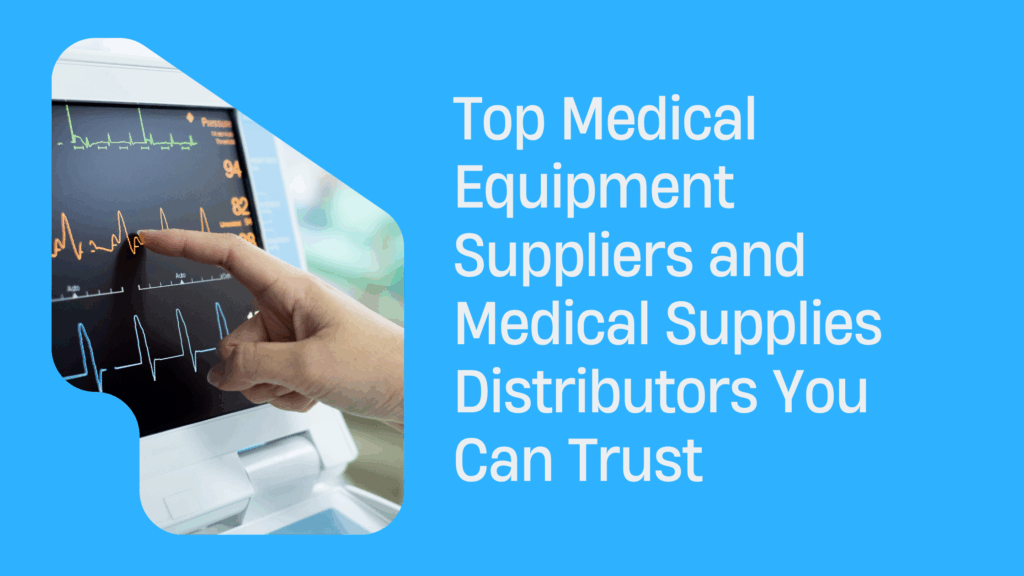
Reliable medical equipment suppliers and medical supplies distributors play a big role in today’s fast-moving healthcare world. Clinics, hospitals, home care services, and even health startups all need steady access to quality products. Whether it’s basic tools or advanced machines, delays or poor quality can impact patient care.

As demand grows, especially in 2026, finding trusted suppliers becomes even more important. This guide helps you understand what to look for and where to find dependable partners for your medical supply needs.
Why Supplier Trust Matters in Healthcare
Impact of Supply Quality on Patient Care and Safety
- Quality equipment can directly affect diagnosis, treatment, and recovery.
- Faulty or substandard tools can lead to misdiagnosis, delayed care, or even harm.
- Trusted medical equipment suppliers follow strict safety and manufacturing standards.
- Consistent quality helps healthcare workers focus on patients, not equipment issues.
Avoiding Delays, Stock Issues, or Regulatory Risks
- Delayed shipments can disrupt surgeries, treatments, or emergency response.
- Stockouts of critical items like PPE or diagnostic kits create serious gaps in care.
- Reliable medical supplies distributors ensure accurate stock tracking and timely delivery.
- Working with certified suppliers lowers the risk of non-compliance or recalls.
- Proper documentation and labeling reduce legal and inspection-related issues.
Long-term Reliability vs Short-Term Cost Savings
- Cheaper suppliers might save money short term but cause problems later.
- Unreliable vendors may change terms, miss deadlines, or go out of business.
- Long-term partners offer stable pricing, consistent quality, and responsive service.
- Building relationships with trusted medical equipment suppliers adds peace of mind during critical times.
- Investing in dependable suppliers supports better planning and operational flow.
Key Criteria for Choosing Medical Equipment Suppliers
When choosing medical equipment suppliers or medical supplies distributors, it’s important to know what to look for. A few key things can make a big difference in your experience and the quality of care you provide.

Certifications and Compliance (FDA, ISO, etc.)
Start by checking for proper certifications. Reputable suppliers follow FDA regulations, ISO standards, or similar guidelines depending on the product type and country. These certifications show that the equipment is safe, tested, and meets legal requirements. If a supplier can’t show proper documentation, that’s a red flag.
Product Variety and Specialization
Good suppliers offer more than just basic items. Look for a range of products—diagnostic tools, mobility aids, PPE, surgical instruments, or home care gear. Some distributors focus on certain areas, like elder care, emergency medicine, or even supporting a hospital management system. Choose one that aligns with your business needs so you don’t have to juggle multiple vendors.
Transparent Pricing and Return Policies
You want clear and fair pricing from the start. A reliable distributor should provide detailed quotes, volume discounts, and no hidden fees. Return and warranty policies should also be easy to understand. This helps if there’s a defect, delay, or change in demand.
Customer Support and After-Sales Service
Things can go wrong—products may arrive late, break, or need replacement. Strong customer support is a must. You should be able to reach someone quickly, whether through phone, email, or chat. Some medical supplies distributors even use Voice AI for customer support that’s available 24/7 or assign account managers for larger clients, which makes communication easier.
Shipping Speed and Logistics
Timely delivery is essential in healthcare. Ask how long it takes for orders to ship, especially for high-demand or bulky items. Some medical equipment suppliers offer same-day or next-day shipping, while others may take weeks. Choose a supplier that can keep up with your pace and has a clear tracking system for every order.
Vetting Checklist for Medical Equipment Suppliers
Before selecting any supplier, use this structured checklist to reduce operational and compliance risks:
- Certifications: FDA registration, ISO 13485, CE marking where applicable
- Compliance Documentation: Product labeling, traceability, and recall procedures
- Minimum Order Quantity (MOQ): Understand volume requirements before committing
- Dropshipping Capability: Ability to ship directly to end customers
- Inventory Visibility: Real-time stock updates or batch feed reliability
- Lead Times: Consistent processing and delivery timelines
- Return and Warranty Policies: Clear and enforceable terms
This checklist ensures you evaluate suppliers beyond pricing and focus on long-term reliability.
Most In-Demand Medical Supplies and Equipment in 2026
Common Categories
Diagnostic Tools
- Include thermometers, blood pressure monitors, pulse oximeters, and glucose meters.
- Widely used in clinics, hospitals, and home care settings.
- Look for accuracy, ease of use, and digital integration.
- Many medical equipment suppliers offer these tools with FDA approval and warranty options.
Surgical Equipment
- Covers instruments like forceps, scissors, clamps, and sterilization trays.
- Must meet high standards for quality and hygiene.
- Durable materials and ergonomic design are key for efficiency in surgical settings.
- Often sourced in bulk from verified medical supplies distributors.
Respiratory Support
- Includes oxygen concentrators, CPAP machines, ventilators, and nebulizers.
- In demand for hospitals and at-home respiratory care.
- Reliable supply is crucial for emergencies and ongoing treatment plans.
PPE (Personal Protective Equipment)
- Masks, gloves, gowns, face shields, and shoe covers.
- Still essential in healthcare facilities, labs, and during procedures.
- Must meet safety certifications and be available in various sizes and quantities.
- Most medical supplies distributors keep a steady inventory of PPE items.
Home Monitoring Devices
- Popular among aging populations and patients with chronic conditions.
- Products include smart thermometers, ECG monitors, and weight scales with app sync.
- Easy-to-use interfaces are a must for non-professional users.
- Good medical equipment suppliers provide compatibility with telehealth platforms.
- These tools are often paired with services like a home delivery pharmacy to ensure patients receive medications and supplies consistently without visiting a facility.
Emerging Products
AI-Powered Tools
- Devices that use AI to detect patterns or support early diagnosis.
- Examples – Smart ECG analyzers, wearable health trackers, and AI stethoscopes.
- Helps reduce manual errors and speed up care.
- Sourcing from advanced medical equipment suppliers ensures compliance and reliability.
Remote Monitoring Kits
- Bundled devices for home use with real-time data sharing.
- Ideal for post-surgery patients, elderly care, and chronic condition management.
- Features may include mobile apps, wireless connectivity, and alerts to physicians.
- Often purchased through tech-savvy medical supplies distributors.
Compact Telehealth Devices
- Portable tools like digital otoscopes, handheld ultrasounds, and smart tablets for virtual exams.
- Support remote consultations and mobile healthcare units.
- Should be durable, user-friendly, and compliant with healthcare standards.
- Leading medical equipment suppliers now offer ready-to-integrate telehealth bundles.
Categorized Medical Equipment Suppliers by Type
To simplify sourcing, suppliers should be evaluated based on their specialization:
Surgical Equipment Suppliers
- McKesson Medical-Surgical
- Cardinal Health
- Medline Industries
Diagnostic Equipment Suppliers
- Fisher Scientific
- QuickMedical
- Medline
Mobility and Home Care Suppliers
- Drive Medical
- Invacare
- Graham-Field
PPE and Consumables Suppliers
- Medline
- Cardinal Health
- Alibaba Health (for bulk sourcing)
Categorizing suppliers helps businesses align sourcing strategies with operational needs and product specialization.
Top Medical Equipment Suppliers to Watch in 2026
The medical supply industry continues to expand, with both established names and fast-growing companies playing key roles in 2026. Long-standing suppliers like McKesson, Cardinal Health, and Henry Schein remain top choices due to their consistent inventory, large product lines, and trusted reputations.
At the same time, newer players such as Medline and Bound Tree Medical are gaining ground with tech integration, streamlined ordering systems, and responsive customer service. These companies support a wide range of healthcare providers—from private clinics to full-scale hospitals—and even specialised needs like radiology locum tenens staffing, and continue to innovate their offerings to meet growing demand.
Companies Offering Reliable B2B Service
McKesson Medical-Surgical
- Offers everything from surgical tools to mobility aids
- Real-time B2B order tracking and invoicing
- Extensive catalog across all medical sectors
Henry Schein
- Known for dental and clinical supply lines
- Includes e-commerce solutions and practice management tools
- Suitable for small practices to large healthcare networks
Cardinal Health
- Strong in hospital systems and bulk medical device distribution
- Customized supply chain solutions for B2B clients
- Focus on pharmaceuticals, lab products, and surgical equipment
Medline Industries
- Large-scale product variety – PPE, diagnostics, rehab gear
- Real-time inventory updates and fulfillment support
- Offers business consulting for bulk buyers
QuickMedical
- B2B-focused platform with live chat and customer service
- Specialized in diagnostic tools and minor surgical equipment
- Competitive pricing for clinics and government entities
Specializations
- Hospitals – Cardinal Health, McKesson, Medline
- Clinics & Private Practices – Henry Schein, QuickMedical
- Labs & Diagnostics – Fisher Scientific, Medline
- Elder Care & Home Health – Invacare, Graham-Field, Drive Medical
- Emergency Medical Services (EMS) – Bound Tree Medical, Life-Assist
Each supplier focuses on different aspects of the healthcare system. Knowing their specialty helps buyers choose the best fit for their needs and patient base.
Supplier Comparison Table with Dropshipping Capability
| Supplier Name | Location Type | Region Served | Strengths | Good For | Dropshipping Support |
| Mckesson | Domestic | USA + Canada | Broad range, compliance | Hospitals | Wholesale Only |
| Henry Schein | Domestic | USA + Canada | Dental, clinical tools | Clinics | Wholesale Only |
| Medline Industries | Domestic | USA + Canada | PPE, diagnostics | Clinics, labs | Wholesale Only |
| Alibaba Health | International | Global | Competitive pricing | Reseller | Limited (Supplier-dependent) |
| Drive DeVilbiss | International | USA + Canada | Mobility equipment | Home care | Wholesale Only |
| Fisher Scientific | Domestic | USA + Canada | Lab equipment | Labs | Wholesale Only |
| Bound Tree Medical | Domestic | USA | EMS equipment | Emergency services | Wholesale Only |
Where to Find Reliable Medical Supplies Distributors Online
Finding dependable medical supplies distributors online can be easier when you know where to look and how to vet them. Here are a few trusted ways to get started:
Directories and B2B Platforms
- ThomasNet – A reliable directory for US-based medical equipment suppliers. Filter by certifications, locations, and business size.
- Medica Trade Fair Directory – Lists global healthcare and medical suppliers. Good for discovering new international options with verified credentials.
- Alibaba – Useful for bulk sourcing. Look for “Verified Suppliers” and those with trade assurance. Be cautious and always start with small orders.
- Global Sources & IndiaMART – Offer additional options for international sourcing. Ideal for comparing pricing and product variety.
These platforms allow side-by-side comparisons, access to company profiles, and direct contact options with suppliers.
Tips for Verifying Reviews and Certifications
- Check multiple review platforms – Look beyond one website. Use Google Reviews, Trustpilot, and business directories.
- Look for red flags – Too many generic or perfect reviews can signal fake feedback.
- Ask for proof of certifications – Legitimate medical supplies distributors should provide documents like FDA registration, CE marking, or ISO certification.
- Request client references – A trusted supplier will usually offer references or case examples.
How to Request Quotes and Compare Terms
- Be specific in your inquiry – List product names, quantities, shipping destinations, and preferred payment terms.
- Request minimum order quantity (MOQ) – This affects your upfront cost and inventory planning.
- Ask about lead times – Especially important for urgent or recurring needs.
- Understand warranty and return policies – These vary widely and impact your risk.
- Compare shipping methods and costs – Some offer free or discounted shipping for bulk orders.
Compliance Warning: FDA and Regulatory Considerations
Medical equipment is a regulated category. Non-compliance can result in legal penalties, product recalls, or account suspension.
Key considerations:
- Ensure products are FDA-approved or registered where required
- Verify labeling, packaging, and usage instructions meet regulations
- Maintain documentation for audits and inspections
- Avoid sourcing uncertified products from unknown suppliers
- Understand regional compliance differences if selling internationally
Selling medical supplies without proper compliance can expose your business to serious risk. Always prioritize certified and verified suppliers.
Dropshipping Medical Supplies: What You Need to Know
Dropshipping medical supplies is possible, but comes with restrictions.
Important points:
- Many suppliers operate on wholesale-only models
- Dropshipping availability is limited and often restricted to low-risk products
- Direct-to-consumer shipping must still meet compliance standards
- Product liability remains with the seller, even when dropshipping
This model is more suitable for non-critical items such as wellness products or basic home-use devices.
Tips for Building Strong Supplier Relationships
Start with Small Test Orders
Before committing to a long-term partnership, place a small test order. This helps you evaluate product quality, delivery speed, and how well the supplier handles logistics. It’s a simple way to check if the medical equipment meets your standards and if the packaging and documentation are accurate. Whether you’re working with new medical equipment suppliers or medical supplies distributors, testing their service on a small scale lowers your risk.
Maintain Regular Communication
Good communication builds trust. Stay in touch with your supplier even when things are running smoothly. In many practices, this responsibility is shared across front-desk staff or handled by a medical office virtual receptionist who can track outstanding orders, follow up on shipment updates, and log vendor responses without pulling clinical staff away from patients. Regular updates help you stay informed about inventory levels, new products, and any upcoming changes in pricing or shipping times. Quick, clear responses from both sides lead to better coordination, especially when orders increase or urgent needs arise.
Understand Each Other’s Logistics and Expectations
Knowing how your supplier handles storage, fulfillment, and delivery helps avoid delays. Ask about their lead times, shipping partners, and how they manage inventory. In return, be clear about your preferred delivery windows, product handling requirements, and any regulatory compliance needs. A strong working rhythm means fewer surprises and smoother operations.
Be Clear on Inventory Planning and Contract Terms
Set expectations early when it comes to order volumes, stock availability, and restocking schedules. If you have seasonal demand or plan to scale, let your supplier know ahead of time. Clarify contract terms like minimum order quantities, payment timelines, and refund or replacement policies. Reliable medical supplies distributors will welcome clear agreements, as it helps them serve you better and plan their operations efficiently.
Questions to Ask Before Partnering with a Supplier
Before working with any medical equipment suppliers or medical supplies distributors, it’s important to ask the right questions. These details can save you from costly delays or compliance issues down the line. Here are key things to clarify:
What’s Their Product Lead Time and Restock Frequency?
- Ask how long it typically takes to process and ship an order.
- Find out how often they restock popular items.
- If you’re managing inventory, you’ll need consistency in availability.
- Delays in medical supply can affect patient care or business operations.
Do They Offer Emergency Support or Dropshipping?
- Some suppliers provide express or emergency shipping for urgent situations.
- Dropshipping options can be useful for businesses without storage space.
- Ask if they can ship directly to customers or facilities on your behalf.
- This flexibility is especially helpful for small clinics or home health retailers.
What are the Warranty and Return Policies?
- Understand the warranty terms for equipment and devices.
- Know what qualifies for a return and how the process works.
- Clarify if return shipping is covered and if there are restocking fees.
- Reliable suppliers should stand by the quality of their products.
How do They Handle Recalls or Compliance Changes?
- Ask how they notify customers of product recalls or safety updates.
- They should have a clear recall protocol and documentation.
- Check if their products stay updated with FDA or other regulatory changes.
- This is especially critical for high-risk or regulated equipment.
Final Thoughts
Choosing trusted medical equipment suppliers and medical supplies distributors is key to keeping your operations smooth and your patients safe. It’s worth taking the time to compare options, check certifications, and review product quality. Don’t just go for the lowest price—focus on reliability and long-term value.
Building solid supplier relationships helps avoid delays, improves service, and supports better care. Whether you’re running a clinic, hospital, or home health business, working with the right partners can make a big difference. Start with small orders, test the process, and grow from there.
FAQ Section
Can I dropship medical supplies without a license?
In most cases, regulated medical equipment requires proper licensing depending on the product category and region. Non-regulated items may have fewer restrictions.
What certifications do I need to sell medical equipment online?
You may need FDA registration, ISO certification, and compliance with local healthcare regulations. Requirements vary by product type and market.
Are there US-based medical equipment dropship suppliers?
Most US-based suppliers operate on wholesale models. Limited dropshipping options may exist for non-regulated or low-risk products, but verification is required.
Discover the Power of Inventory Source: An Introduction Video
Recent Articles
Supplier Onboarding Checklist for Ecommerce Businesses
Use this supplier onboarding checklist to verify business details, commercial terms, product data, field mapping, inventory sync, pricing, order routing, and fulfillment before a new supplier goes live in your ecommerce systems.

How to Manage Multiple Suppliers Without Increasing Operational Costs
Learn how to manage multiple suppliers without increasing operational costs, using standardized onboarding, centralized data, automated catalog and inventory updates, supplier-based order routing, pricing rules, and exception-based workflows to scale your supplier network efficiently.

Inventory Accuracy – Best Practices for Multi-Channel Sellers
Learn how multichannel sellers maintain inventory accuracy using a central stock source, standardized SKU mapping, synchronization rules, available-to-sell logic, buffers, and supplier feed validation to prevent overselling and keep stock consistent across every channel.